2025 witnessed major funding cuts across the international development sector. In January 2025, USAID, the world’s largest humanitarian funder, was effectively dismantled. Major Official Development Assistance (ODA) cuts followed from several other countries including France, Germany and Belgium. Just last week we saw confirmed ODA cuts from the UK Government, including that in 2026/27 alone, Africa will receive 40% less bilateral aid than in the previous year. Overall, when comparing the 2028/29 allocations to pre-cut levels in 2024/25, we will witness a 56% (or £874million) reduction in ODA from the UK.
And yet, for several commentators, 2025’s funding cuts actually underscored a unique opportunity to reimagine our sector. To push for an international development sector that leaves behind an over-reliance on ODA and instead challenges power structures and fosters locally-led development.
This is an important framing in what was is otherwise a devastating situation. But we also know that these long-held objectives are not going to happen overnight. Instead, they will require fundamental shifts in power, funding and economic structures between the Majority and Minority Worlds.
So what about in the meantime? As in right now? How can we ensure that existing development actors and NGOs are taking up this opportunity to mobilise locally-led development – whilst also navigating drastic reduction in funding? How can the sector work smarter, not harder, to address the most complex challenges of our time?
One clear option is through strategic and streamlined collaboration within the sector itself. Beyond traditional funder-to-NGO relationships, we also need to be urgently pushing for more and better funder-to-funder and NGO-to-NGO collaboration.
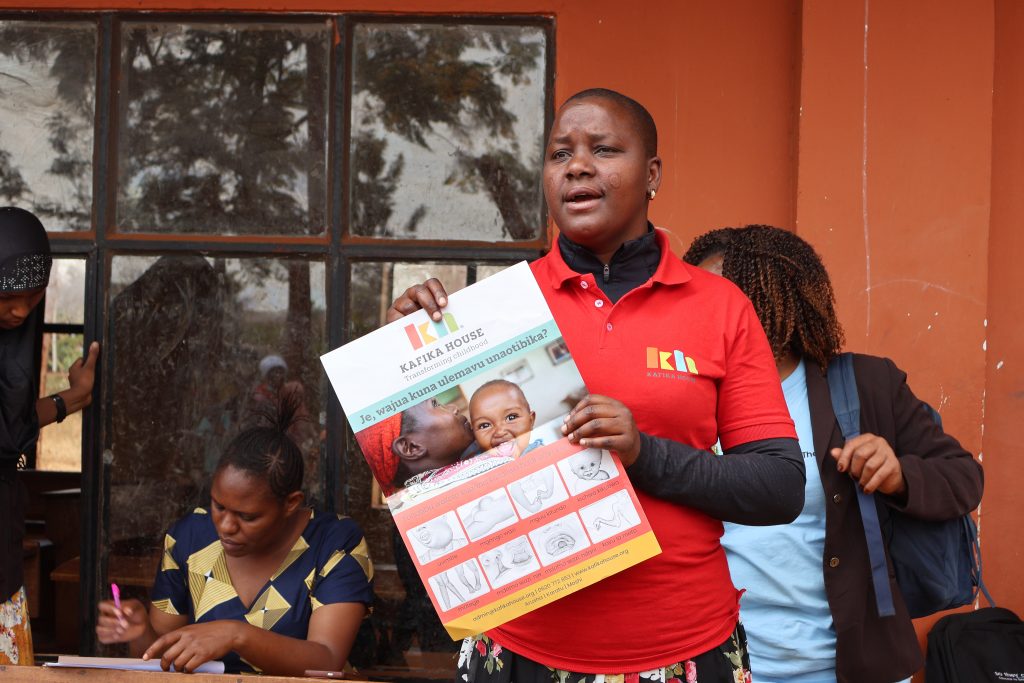
Kafika House providing information to So They Can community members at the 2025 Medical Camp.
Several examples have already emerged. On the funding side, in 2025, The Life You Can Save and Founder’s Pledge launched their Rapid Response Fund to streamline funding to NGOs who had lost vital funds following the USAID cuts. It raised $13 million USD for impacted charities. For NGO-to-NGO collaboration, Emergency Action Alliance is a group of 15 aid organisations in Australia who have combined their expertise and resources to create a targeted and effective response to international emergencies. A number of organisations, such as CAN DO, have similarly taken a consortia approach to humanitarian response via the Australian Humanitarian Partnership. Foundations such as the Segal Family Foundation are doing an excellent job of reducing competition within the NGO marketplace. Instead, they seek to bring African-led NGOs together to share complex learnings and foster collaboration.
For the So They Can Team, the importance of partnerships with other NGOs has never been so clear. For example, whilst our primary focus is reducing poverty through access to quality education in Kenya and Tanzania, disability inclusion is a cross-cutting issue across our Education and Community Development Programs. Every year, we deliver annual medical camps as part of our Community Health project. And every year, we identify numerous children who are living with disabilities at these camps. Identifying them is one thing. But ensuring that they have the necessary medical treatments, resources and facilities to not only attend but flourish at school is another. This is where partnering with other in-country NGOs has become a critical resource in our intersectional toolbox. Since 2023, we have been partnering with organisations such as Kafika House and Kyaro Assistive Tech. Both partners help our team to complete assessments and provide treatments for children living with disabilities including: operative, rehabilitative and tailor-made assistive devices.
National NGO partnerships, with a role for governments, are also vital to streamlining impact in a sector with reduced funding. Girls Not Brides Kenya is a national partnership of over 135 civil society organisations working to influence policy and budget decisions that help end child marriage and Female Genital Cutting (FGC) in Kenya. Alongside local governments, Girls Not Brides has allowed our teams, in addition to organisations such as Dandelion Africa, World Vision Kenya, Sauti Ya Dada and Better Lives, to engage in shared advocacy, research, and mobilise resources between NGOs to reduce child marriage and FGC.
Like many of our peers in the education sector in East Africa, we are also a member of The Tanzania Education Network/Mtandao wa Elimu Tanzania (TEN/MET). Founded in 1999, TENMET is a national network of 255 Tanzanian CSO members working as a united civil society voice for quality education. TENMET provides pivotal opportunities for its members to regularly come together and ask: how can we leverage our on-the-ground experience to inform and influence policies at a systems level? Through TENMET a major policy breakthrough was achieved in 2024. For the first time ever, young girls who had fallen pregnant in Tanzania were allowed to complete their schooling. This historic movement was only possible due to a groundswell of collaboration between NGOs, local, regional and national government. With TENMET itself a part of ANCEFA or the Africa Campaign for Network Education – there is also potential to see how the education policy learnings produced through TENMET might be further shared and emulated across the Continent.
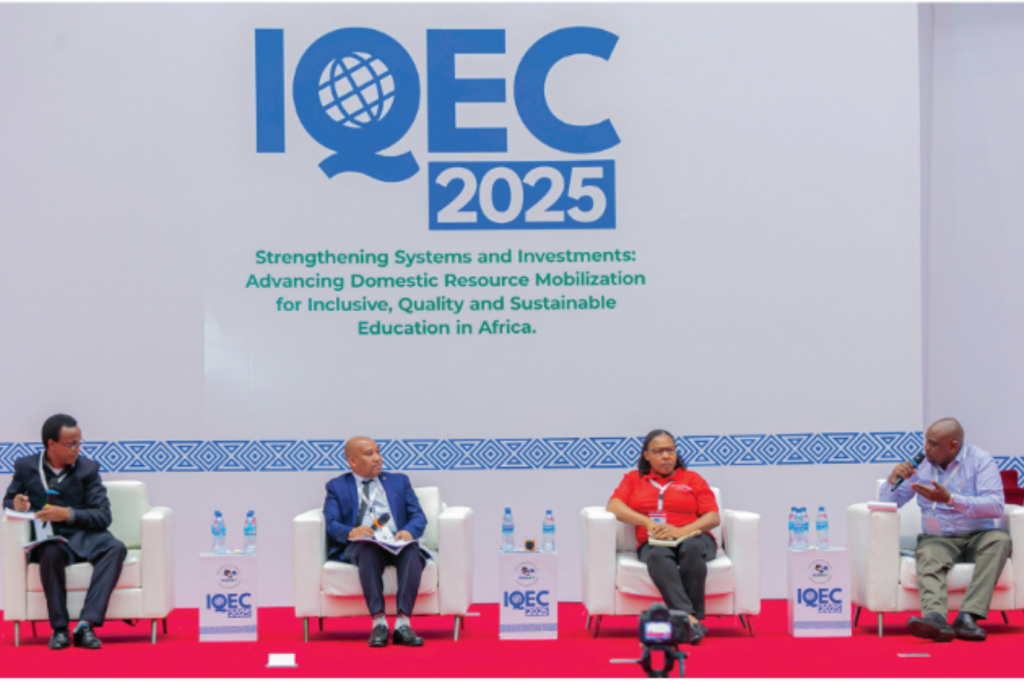
Panel Discussion at TENMENT’s 2025 International Quality Education Conference (IQEC) featuring So They Can’s Grace Swai (Education Programme Manager, So They Can Tanzania), Edward Wawa (Assistant Director, Teacher Training, MoEST), Peter Maina (School Teacher, Sunray Pre and Primary School) and moderated by Nicodemus Shauri (Executive Director, Maarifa ni Ufunguo).
Undoubtedly, we face a significant moment to reimagine and challenge our sector. And being a sector inherently underpinned by innovation, optimism and distinctly entrepreneurial founders and funders, we have the leadership to do it. And yet with increasingly limited funding, practically, it is also not the time to reinvent the wheel. Instead, it is time to pause, take stock of our peers with overlapping objectives within our ecosystems, and foster in-country collaboration between in-country NGOs, governments and communities. Not only will this allow INGOs to increasingly benefit from principles of localisation but will also provide the opportunity to maximise impact by bringing different thematic areas of expertise, experience and funding together.
Roselyne Mariki is the Country Manager for So They Can in Tanzania, where she leads the organisation’s holistic programs in marginalised rural school communities. She is deeply motivated by the resilience of the communities she serves and is dedicated to ensuring that every child has the opportunity to realise their potential.
Roselyne has steered the growth of So They Can in Tanzania sustainable graduation model, and strengthened partnerships for advocacy and influence. Her team fosters direct partnerships with local and national governments, education stakeholders, teachers, parents and school communities to implement So They Can’s Education Program and Sustainable School Development Framework. Under Roselyne’s leadership the allocation of government funding for infrastructure at So They Can’s partner schools has significantly increased.
Roselyne was elected and served a term as the Board Vice Chair of the Tanzania Education Network representing more than 160 Education CSOs in Tanzania. During a visit to Sydney in 2025, she was a panelist for the Q & A Education in Africa. Why bother? hosted by Macquarie Bank, together with her team she welcomed the AIDN Insight Tour to So They Can Tanzania in 2024, and she was an invited panellist on STEM in schools at the US Exchange Alumni Thematic International Seminar in Egypt in 2023.
Dr. Hannah McNicol is an international development researcher, writer and communications professional. Hannah is the London-based Grants, Research and Communications Executive at So They Can, and Communications and Research Manager at AIDN. Hannah previously worked with Good Return and the Australian Red Cross.
Hannah completed her PhD in International Development as a Cookson Scholar jointly at the University of Melbourne and the University of Manchester in 2025 (Dean’s Honours Recipient 2026). She conducted her doctoral fieldwork in Cambodia in 2023, and is affiliated with the Global Development Institute and a Research Associate with the Second Cold War Observatory. Hannah holds a Masters of Development Studies, specialising in gender, from the University of Melbourne (Dean’s Honours List 2020) and a BA in History and Politics from the University of Oxford (Magdalen College, 2018).
Feature image: So They Can