- Over two years of conflict and civil war.
- More than 12 million people displaced.
- 30.4 million people in need of humanitarian support.
- Devastating famine.
- Minimal press coverage.
Since April 2023, fighting between the Sudanese Armed Forces (SAF) and the paramilitary Rapid Support Forces (RSF) has led to the world’s largest humanitarian crisis.
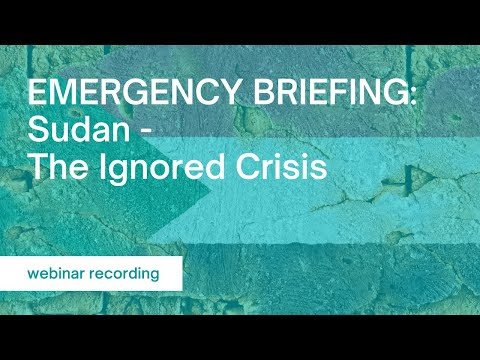
Earlier this week, AIDN hosted an Emergency Briefing on this crisis. We encourage you to watch the recording and read below to learn how you can ensure that the world does not turn its back on this any longer.
We extend our sincere thanks to our panellists for their important insights including:
 Catherine Green (Head of Urgent Challenges at Minderoo Foundation)
Lisa Searle (Senior Project Coordinator at Médecins Sans Frontières Australia)
Dr Alaa Elmalik (President of the Sudanese Australian Medical Professional Association)
Annmarie Swai (Deputy Program Director from UNICEF in Sudan)
The philanthropic community must step up and respond. For individuals and organisations that would like to support the Humanitarian Response in Sudan, there are many ways to do this depending on your preferences and organisational guidelines. The most important thing is to translate compassion into action and keep raising our voices about Sudan.
You can direct your giving to the three organisations that featured on our panel, which are all registered charities in Australia, including UNICEF Sudan Appeal, MSF Sudan Appeal and The Sudanese Australian Medical Professionals Association accepts donations through bank transfer – BSB 063349 Account Number: 10274043.
There is also a useful guide for philanthropists on Sudan that the Centre for Disaster Philanthropy has put together which provides guidance on how to give to local organisations in Sudan. In addition:
- Donate to Caritas Australia’s Crisis in Sudan Appeal
- Donate to ACFID’s Consolidated Appeal
- Donate to ActionAid’s Sudan Appeal
- Donate to Plan Australia’s Sudan Crisis Appeal
- Donate to UNHCR Australia’s Sudan Emergency Response Appeal
|
Q&A from our panel |
|
In the Briefing, there were several questions posed to the panel that we didn’t have time to get to. Here are their responses now: Q: In addition to the practical contributions to the NGO sector, what are the necessary steps to sustainably move the needle in Sudan and South Sudan at a macro level?
Q: Is UNICEF experiencing the same barriers as MSF?
Q: Do local Sudanese staff need to apply for these permits into the States or is that something that only applies for foreign staff?
|
|
For those interested in learning more or supporting the ongoing humanitarian crisis in Sudan please see below: |
|
Further information and explainers:
Thought leadership and critical analysis:
|