There is a particular kind of conviction required to fund work you have never seen with your own eyes, in a country you have never visited, during a period of sustained instability. That was the position we found ourselves in with South Sudan.
We made the decision to fund before ever setting foot in the country. We believed in the leader. We trusted the vision. And we understood or thought we understood that in fragile contexts, trust-based philanthropy is not naïve idealism. It is often the only model that works. Rigid compliance frameworks, risk-averse diligence cycles, and the expectation of quarterly certainty are not tools designed for places like South Sudan. They are tools designed for places that already have the conditions South Sudan is trying to build. Deploying them here would have meant not deploying at all.
So, we trusted. And the trust was warranted.
But trust at a distance carries its own costs, and a recent visit made them visible. By not coming sooner, we had been funding a version of the work that lived in reports and calls and the articulate conviction of a founder we believed in, rather than in the reality of classrooms, the faces of students, the quiet persistence of teachers showing up every day in a city where so much else has broken down. We could speak about the impact. What we could not do until now was speak about it with the ownership and specificity that only comes from having been there.
That has changed.
Our South Sudan Experience: Defying the “Perfect Storm” in South Sudan
South Sudan is a country where fragility is not an abstract concept; it is a lived reality. The Revitalized Peace Agreement is under severe strain, marked by the arrest of opposition leaders, intensifying military clashes, and a persistent lack of political will among the signatories. Inflation has surpassed 110%, eroding the purchasing power of ordinary households for even the most basic goods. Public services remain thin, overstretched, or absent entirely. Yet amid this convergence of crises, there are pockets of order, intention, and hope. One of them is Education Bridge and its Greenbelt Academies.
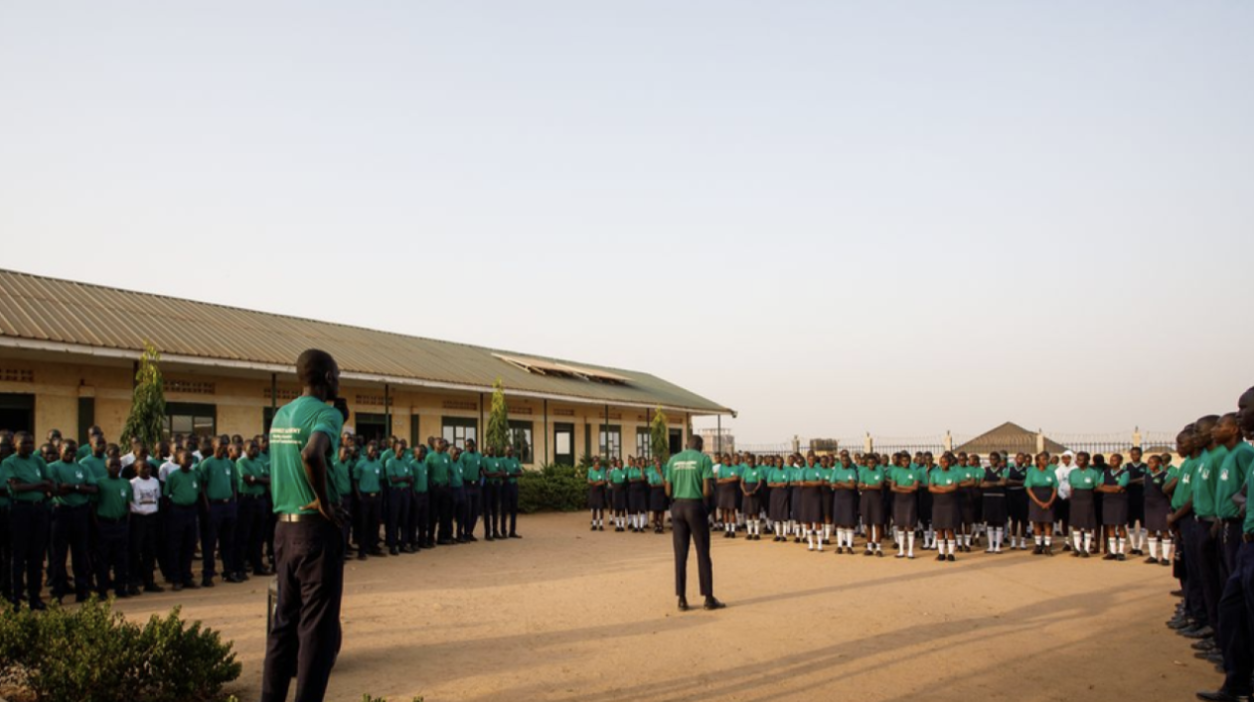
Walking through their gates, the contrast is immediate. Outside, the state struggles to deliver even the most basic services. Inside, classrooms are thoughtfully designed, timetables run on schedule, and students move with purpose. Ranked among the highest-performing schools in the country, the Academies serve over 1,200 students across campuses in Juba and Bor, bringing together young people from diverse ethnic communities under a curriculum that weaves peacebuilding and leadership development alongside academic rigor. It is a reminder that even in the most fragile contexts, high-quality institutions can exist and thrive.
The Scale of the Challenge
South Sudan’s development indicators underscore the enormity of the task. GDP per capita stood at just $345 in 2024, placing the country among the poorest in the world. Unemployment is widespread, and livelihoods are largely dependent on subsistence agriculture. Healthcare facilities are scarce, and health outcomes are among the worst globally, not just regionally. South Sudan’s maternal mortality ratio stands at 1,223 deaths per 100,000 live births, with 40 newborn deaths per 1,000 live births, figures that rank it near the very bottom of global rankings.
Education is perhaps the starkest challenge:
- Net secondary enrolment stands at just 5.2%, meaning the vast majority of secondary-age children are not in school.
- Around 63% of teachers are without formal training, and the Ministry of General Education reports that more than half of all teachers are untrained.
- Transition rates from primary to secondary are low, and completion rates are even lower, compounded by the fact that up to 86% of learners are at least five years overage for their grade.
Against this backdrop, the existence of a functioning, high-quality secondary school is not just impressive; it is transformative.
A School as a Stabilizing Force: Greenbelt Academy – Juba Campus
South Sudan’s education system is, by almost any measure, in crisis. Most secondary-age children are not in school. Most teachers are untrained. And in many parts of the country, secondary schools barely exist at all.
Education Bridge’s Greenbelt Academy in Juba shows what is possible even within these constraints.
The campus serves 350 students in grades 9 to 12. Classrooms are well-organized, timetables run on time, and teachers are trained and held to high standards. A modest kitchen, built from iron sheets, produces three meals a day, a small but significant detail in a country where hunger drives many children out of school. Space has been set aside for future growth.
What the school offers, above all, is consistency: structure, safety, and a sense of normalcy that many students have never experienced elsewhere.
During a History and Citizenship class, students were engaged, attentive, and unafraid to participate. Girls and boys were equally present in the room, which matters in a country where girls are the group most likely to be out of school, and where more than half of all girls are married before the age of eighteen.
The students at the Juba campus carry themselves with a quiet confidence that is hard to miss. The girls in particular, many of them boarding students from distant communities, were articulate, assured, and unafraid to speak directly about the challenges facing their country and their generation.
Their aspirations reflect both the quality of their education and their clear-eyed understanding of South Sudan’s needs. Journalism, law, public service: these are not abstract ambitions but responses to the world they are growing up in. Two recent graduates, awaiting university admission, have already begun teaching in local primary schools, a small but meaningful contribution to a sector where the majority of teachers hold only a secondary school certificate.
Yet the pressures these students face do not end at the school gate. Each year, four or five girls from the campus leave to marry, most of them day scholars, which speaks directly to the protective value of boarding facilities. Families frequently invest less in daughters’ education than in sons’, reasoning that a girl’s learning ultimately benefits another household. Poverty compounds this: without financial support, some girls become economically dependent on men, and domestic instability at home disrupts even the most motivated learners.
Education Bridge responds to these pressures not only through scholarships and boarding facilities, but through mentorship, structured advisory sessions, and a school culture that actively reinforces the value and capability of every student.
What the Visit Taught Us
Visiting gave us a real picture of the work, not just what we read in reports. It also showed us that funding in fragile places needs a different mindset, one that no amount of desk research can fully prepare you for.
- There is always a window. Even in the most unstable environments, good work can take root and hold. Fragility is not uniformity. Within the same city, within the same week, you can find institutions failing and institutions thriving. The question is not whether conditions are perfect; they never are, but whether the people, the model, and the moment are aligned.
- Follow local leadership. It’s easy to say but harder to do. It means not forcing outside frameworks or comparing South Sudan to places that are very different. Education Bridge is led by South Sudanese people who know their context best. Our role is to support their vision, not second-guess it.
- Stay flexible. In stable places, plans give structure. In fragile ones, plans are only a guide because things change constantly. Risks may turn out to be manageable, and simple tasks may become complex. Flexibility here is not weakness — it’s a skill.
- Manage risk differently. Fragile does not mean impossible. It means being intentional, knowing some things won’t go as planned, and being clear about which risks can be handled. Strong relationships and trust make it possible to adapt together when things shift.
Where We Stand Now
Having visited, we are more confident, not less, in the potential of South Sudan, and in our decision to fund this work.
That might seem counterintuitive. The challenges are visible and real: the economic fragility, the strained peace process, the depth of the education crisis, the weight of need pressing against the edges of what any single school can do. None of that was hidden from us.
But neither was this: a cohort of young women and men, articulate and assured, describing the country they intend to help build. Classrooms that work. A founder who has held a vision together across years of instability and is only now beginning to reach the scale the vision deserves.
South Sudan’s challenges are immense. So is the potential of its young people. When a school functions well in a place where systems are failing, it does more than educate; it stabilizes, nourishes, protects, and demonstrates. It holds open a door that so much else is working to close. And it reminds everyone who passes through it, students, teachers, visitors, that what is possible is not determined solely by what surrounds you.
That is worth showing up for.
References:
https://www.securitycouncilreport.org/monthly-forecast/2025-05/south-sudan-34.php
https://tradingeconomics.com/south-sudan/inflation-cpi
Education Bridge (Spring 2025) — International Development in Practice
South Sudan GDP per Capita (USD) – FocusEconomics
International Day of Education | United Nations in South Sudan
Reprioritising Resources for the Future of South Sudan – Amnesty International
 Lenah Nduku Gideon is an accomplished program strategist and development practitioner based in Kenya, with over a decade of experience advancing community-driven solutions across East and Southern Africa. Her career has been defined by a deep commitment to shifting power to local leaders, strengthening social impact organisations, and improving outcomes in women’s economic empowerment, education, child safeguarding, and community health.
Lenah holds a Master’s Degree in Commerce from Strathmore University in Kenya and is an Ashoka Fellow.
Feature image and content originally published on LinkedIn’s Our Journey as a Funder: Trust, Learning, and Humility.