In July this year I attended the annual LANDac Land Governance Conference in Utrecht, the Netherlands. I was chairing a session, “Learning from SPARC research on gender and youth issues in farmer-herder conflicts and pastoral land governance”, and sharing my reflections in the Conference’s Closing Plenary. SPARC – Supporting Pastoralism and Agriculture in Recurrent and Protracted Crises is a UK Foreign and Commonwealth Development Organisation (FCDO)-funded knowledge to action programme, running from 2020 to 2025. Some of its locally led research on gender was jointly supported by Canada’s International Development Research Centre (IDRC).
In October I attended the UN Consortium of International Agricultural Research Centers (CGIAR) Gender Impact Platform biennial conference, “Accelerating Equality in Food, Land and Water Systems”, in Cape Town, South Africa. At CGIAR, I was facilitating SPARC researchers sharing their evidence from recent studies in climate-fragile and conflict-affected arid and semi-arid areas of the Sahel and the Horn of Africa, where nomadic and semi-nomadic pastoralism and agro-pastoralism is common.
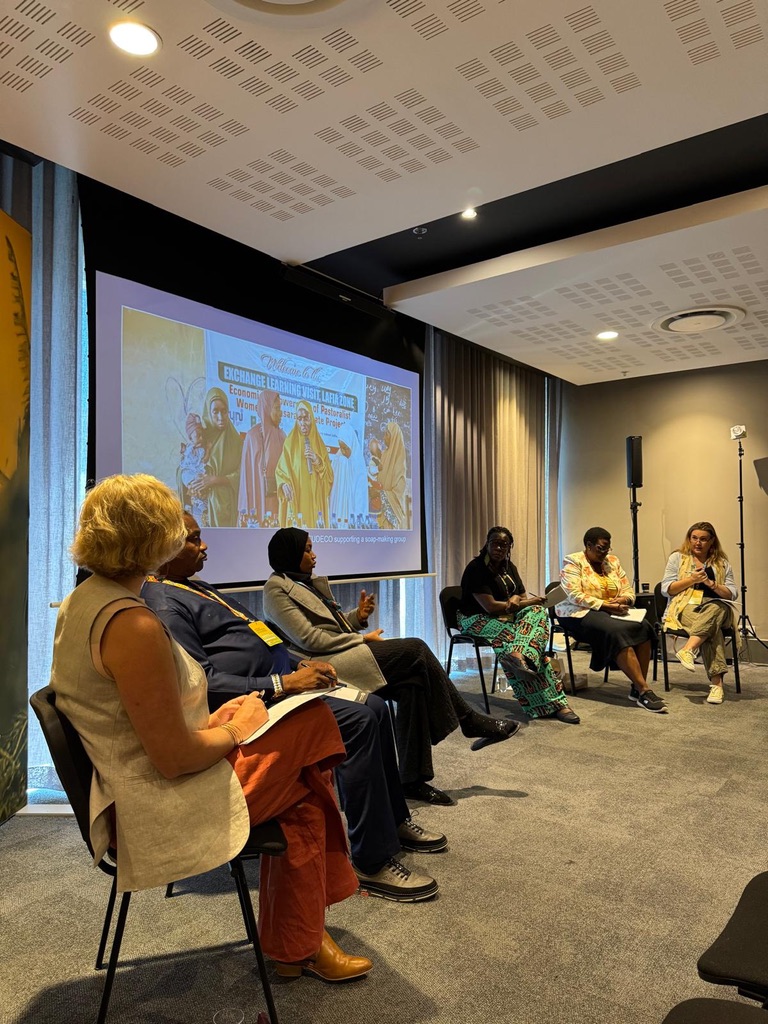
SPARC researchers sharing findings in Cape Town at the CGIAR Gender Impact Platform’s biennial conference, October 2025. Credit: Caroline English / SPARC
These two global events were great face-to-face spaces in which to advocate for pastoralists and indigenous groups, drawing on recent field evidence from Nigeria, Somaliland, South Sudan, Sudan, and Chad. Together these two events and SPARC research from the past six years have underscored a clear and important finding: climate change does not cause land conflict but, rather, it makes it worse. It does this by:
1. Exacerbating underlying gender inequalities in social and cultural norms around land governance and decision making over access to and the ownership, management and control of resources, including ongoing inequalities in pastoral land governance; and
2. Amplifying underlying political economy factors and tensions that fuel existing conflicts and disputes over resources.
The silver lining, however, is that, as the situation for women in drylands worsens, there is also hope.
SPARC’s researchers found and shared that:
1. A key to better programming is engaging with men. The SPARC studies provide evidence of gradual change in behavioural trends, which challenge existing gender norms through increasing involvement of men in home-based care activities. Strategies for uplifting drylands communities must engage with men as allies, educating them on the benefits of strengthening women’s participation and providing skill building opportunities for both women and men.
2. Working across the generations – with both adults and adolescents – is also key to addressing common pastoralist practices, such as low school enrolment and early marriage, that negatively affect women and girls. Such practices impact directly on women’s social status and their participation in local governance and natural resource management, which is critical to effectively addressing climate fragility and supporting adaptation.
3. Collaborative partnerships with CSOs, local and national NGOs, and wider campaigns that advocate and advance pastoral rights have a key role to play in ensuring the local relevance and sustainability of aid programming in drylands.
Climate change and changing gender roles and relations
At LANDac, Chol Peter Bak of Infinity Consultancy, South Sudan, explained how changes in gender roles in Gogrial East County have emerged from excessive flooding due to climate change. Older women and young children no longer move to cattle camps during livestock migration, young men are now recruited to be protection guards against cattle raids, and older girls are now involved in grazing calves and treating sick animals.
Another researcher, Dr Pacificah Okemwa, from Kenyatta University, reported impacts of conflict- and climate-linked fragility in Bor County that exacerbated underlying gender inequalities, including abductions of women, boys and girls, and gender-based violence against women and girls, whose vulnerability in South Sudan is driven by culturally and socially prescribed gender roles.
Aishatu Ardo Bashir, from the Fulbe Development and Cultural Organization (FUDECO) and Taraba State University in Nigeria, spoke about women small-scale dairy farmers, who lack “lands of their own” and grapple with low milk production due to crop farmers and housing pressures encroaching on grazing reserves, which they have relatively limited power to challenge. However, at the CGIAR event, FUDECO’s Jamila Hassan shared more positive news that men are increasingly supporting their wives with unpaid care work at home. Dr Johnson Egbemudia Dudu, of the Center for Population and Environmental Development (CPED), agreed, drawing on his own experience in northern Nigeria, where men dominate culturally, yet CPED found growing evidence of this kind of change.
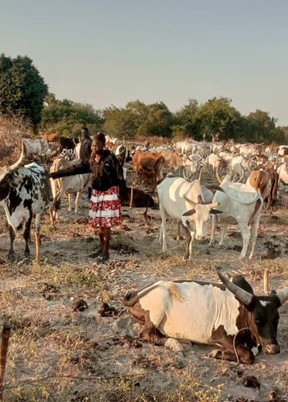
Caption – Pastoralist women tending cattle in Gogrial East County, South Sudan. Credit – Chol Peter Bak.
Amplifying political economy factors, and intersectionality beyond gender
The impacts of climate change on changing gender roles and relations are exacerbated by political economy factors, which generally worsen the situation for women. Climate change increases vulnerability, especially for those already most vulnerable within communities, because of important political economy and gender normative links.
At LANDac, Professor Hussein M. Sulieman, from the University of Gadarif in Sudan, echoed other SPARC researchers in highlighting the limited participation of women in both land governance decision making and conflict resolution. Traditional social norms restrict women’s ability to influence outcomes from farmer-herder conflicts and climate fragility, limiting their economic opportunities and increasing their vulnerability.
Barbara Codispoti of Oxfam Novib shared another example, from Chad. Some one million Darfuri refugees, mostly women and children, have arrived in Eastern Chad. SPARC’s research looked at how these Sudanese women, often of the same ethnicity as local Chadian women, gain access to land in Chad. Despite some challenges, their refugee status makes their situation better than that of the Chadian women, who are unable to access land due to the same social norms that prevent the Sudanese women from acquiring their own land in Darfur.
At the CGIAR event, Milcah Asamba from Mercy Corps explained how, in Somaliland, religious and cultural notions of community upliftment as a shared responsibility for all who are progressing require successful pastoralist women entrepreneurs to respond to the additional social responsibilities that their empowerment brings. It is age and marital status that are relevant here, with it hard for young mothers to take part in women’s economic empowerment projects because they have limited time to fulfil the social obligations they would incur with success.
Hope for women
Despite the worsening overall situation for women threatened by climate change and land conflict in drylands, SPARC’s researchers found many reasons for hope. The key is getting aid programming right. Engaging with men, working across the generations, and collaborating effectively with CSOs, NGOs and wider gender equality campaigns are all critical pathways.
As Dr Renee Bullock, a Senior Scientist at the International Livestock Research Institute (ILRI), shared at CGIAR, historically speaking much drylands programming across Africa has focused on the need to change the system through policies such as sedentarisation. Development partner interventions have often neglected to factor in pastoral values, beliefs and social structures, and vulnerable groups, including indigenous ethnic groups, have tended to be neglected. Yet discrimination and power dynamics are intersectional by nature. Renee argued that programming to support women must grapple with the complexity of social norms in pastoral and agro-pastoral communities, in addition to mobility and remoteness issues. This means working with adults and adolescents, working with men as well as women, and collaborating via broad partnerships involving CSOs, local, national and international NGOs and other development partners.
Moving forward
SPARC’s evidence on climate change and gender shows that the perception that land conflicts are driven by climate change is wrong. Instead, climate change exacerbates underlying political issues of injustice and discrimination in land governance.
Six years of research leads to the clear policy recommendation that attention to gender needs to be fully integrated into all drylands programming and pastoralist-focused interventions, especially those addressing climate change. Such a gender lens can be integrated by working across the generations, engaging with men, and collaborating with local and national partners.
Tactics are also key. Too often, people do not speak the same emotional language about land, natural resources, or social norms, nor about the impacts of climate fragility. Research presents an opportunity to build evidence for action, as SPARC has shown.
My key takeaway from these two global events is that: we need to keep being strategic in what we research but tactical in how we do our research, how we frame our questions, methods and findings, and in working out who our audience is and who our potential champions for change might be.
 Elizabeth Daley serves in a voluntary capacity as Chair of the Board of the Land Portal Foundation and has worked as an independent consultant on land tenure, gender equity and social inclusion for over 20 years globally. Elizabeth has worked for varied clients including the UN’s Food and Agriculture Organization (FAO), Environment Programme (UNEP) and World Food Programme (WFP); bilateral donor agencies such as FCDO/DFID (UK), RVO (the Netherlands) and USAID; NGOs like ActionAid International, International Justice Mission and the International Land Coalition; and philanthropists, private sector companies, and more. Roles have included legal and policy reviews, project and programme evaluations, design and implementation of training and capacity building programmes, technical advisory inputs to land administration projects, and rigorous academic (PhD) and technical fieldwork-based research. For more information or to contact Elizabeth, see her LinkedIn bio.
Additional reading and resources:
- https://www.sparc-knowledge.org/news-blog/blog/cattle-huts-jonglei-south-sudan-key-cultural-feature-dinka-pastoralists
- https://www.sparc-knowledge.org/publications-resources/gender-transformative-approaches-pastoralist-societies
- https://www.sparc-knowledge.org/publications-resources/lessons-funders-locally-led-womens-empowerment
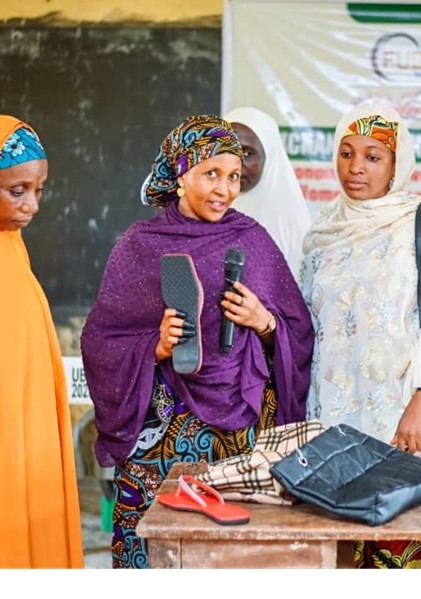
Feature image: FUDECO’s SPARC supported shoe and bag making group for women’s economic empowerment, Nigeria. Credit: FUDECO