How long have you been involved in the international development sector, and what first inspired you to enter the sector?
I can’t speak about my journey in this sector without starting with where it all began. As a young person, tennis became my pathway, one that took me from local courts in Malawi to representing my country on international stages. Along the way, I rose to become Malawi’s number one tennis player for five consecutive years.
That experience did more than build my athletic career; it exposed me to world-class sports infrastructure and possibilities far beyond what I had known. It widened my perspective on what systems can look like when they truly support talent and growth.
That journey ultimately opened the door to an NCAA scholarship in the United States, an opportunity that not only shaped my future, but continues to influence how I think about access, equity, and building better systems for young people today. While studying there, I often found myself explaining where I came from, Malawi, a country many people knew little about. Those conversations sparked something deeper than pride; they created a sense of urgency to act. I knew I wanted to do more for my country.
Out of that conviction came a vision: to build pathways for young people to access quality education, and to unlock opportunities for higher education through sports scholarships—just as I had experienced. That vision became the foundation of what would later grow into MATCH Foundation, formally established in 2020.
Since then, I have immersed myself in understanding what it truly means to create equitable access to quality education, and how clearly defined graduate aims can shape a child’s learning journey. Over the past several years, working at the intersection of education and sports for development has grounded me in a simple but powerful belief: when young people are given the right opportunities, they can redefine what is possible for themselves and their communities.
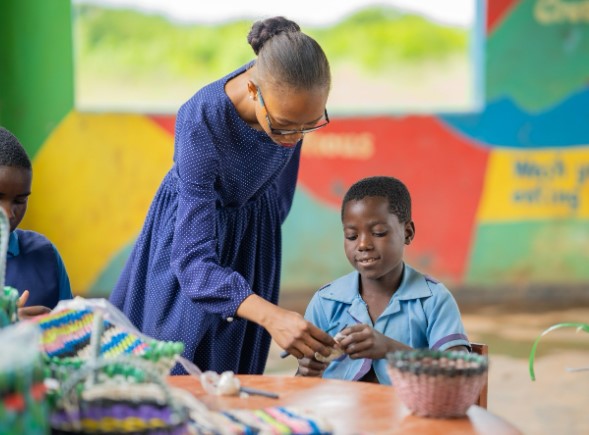
A tutor supporting a student during a ‘learning by doing’ activity. Source: MATCH Foundation.
What have been the biggest changes you have witnessed throughout your time in the development sector, specifically in relation to your area of expertise?
One of the most significant shifts I’ve witnessed in Malawi’s education space is a move away from purely theoretical learning toward a more practical, “learning by doing” approach. Increasingly, we are seeing learners step beyond the classroom to actively engage with their environment – exploring, experimenting, and applying knowledge in real time. This shift not only deepens understanding for students, but also transforms the role of teachers, who are now learning alongside their students through shared, experiential moments.
Perhaps most encouraging is the change in mindset among parents and communities. Where sports was once dismissed as a distraction for those struggling academically, it is now being understood as a pathway for all learners, one that builds discipline, teamwork, and critical thinking. Today, there is a growing appreciation that education and sports are not competing priorities, but complementary forces. Being part of this shift and helping to integrate these two worlds has been both a privilege and a powerful reminder of what is possible when systems begin to evolve.
If you could see one change in the international development sector occur tomorrow, what would it be and why?
There is a shift I find myself longing for in the international development sector, one that is less about control, and more about trust. Too often, funding relationships feel transactional, defined by distance between those who give and those who do. But imagine something different: a space where nonprofits are trusted, where funding is not just a transaction but a belief in growth, in vision, in long-term change.
In that kind of world, partnerships would feel less like hierarchy and more like shared purpose. Philanthropists would sit alongside organisations, and organisations alongside the communities they serve not as separate layers, but as co-creators. Together, they would design, build, and adapt solutions, each voice carrying equal weight. The work would no longer be divided into “funders” and “doers,” but unified by a common commitment to impact.
Because the truth is simple, and deeply human: none of us can do this alone. Resources matter. Lived experience matters. Implementation matters. Each role is essential, and none is complete without the other. When we begin to see ourselves not as separate actors, but as partners in a shared mission, we move closer to the kind of change we all hope to create, one shaped not by power, but by collective purpose.
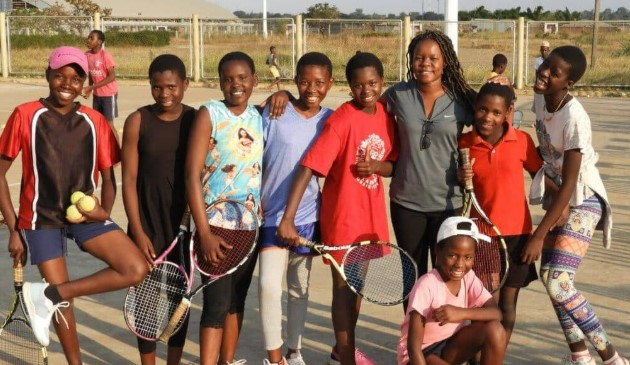
Tadala with girls in the Play and Stay sports program. Source: MATCH Foundation.
AIDN’s ethos is “more” and “better” international giving from Australians. What does “more” or “better” international giving look like to you?
“More” or “better” international giving means moving beyond one-time donations toward multi-year, trust-based partnerships with nonprofits that understand their communities. It prioritises flexible funding that allows organisations to design learning environments that are relevant, inclusive, and responsive to local realities.
In the context of learning infrastructure, better giving means investing in spaces that prepare learners for the 21st century. This means providing safe, adaptable classrooms equipped for digital learning, critical thinking, creativity, and collaboration. It supports not just buildings, but the full ecosystem: teacher development, access to technology, and curricula that connect education to real-life skills and opportunities.
Ultimately, this builds a stronger international giving landscape that empowers rural communities to lead their own transformation. It centers local voices, builds capacity for self-reliance, and measures success not just by outputs, but by long-term impact where communities sustain and expand solutions independently, creating lasting change across generations.
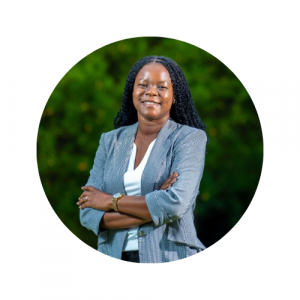 Tadala Kandulu Ngosi is the founder and Executive Director for MATCH Foundation, a youth-led organisation championing youth development through transformative education and sports approaches. She is a national award winner under the 2025 Malawi’s Young Leaders for SDGs, as well as the recipient of the Malawi Youth Impact and Leadership Award of 2024.
Through her work with MATCH Foundation, she reaches over 6,000 youth every year. She is a passionate change-maker who champions academic excellence, youth empowerment on equitable and quality education, gender inclusion and meaningful systematic participation. She is also an advocate for mindset mentorship on socio-economic empowerment for youths in Malawi through sports and education interventions. She studied economics at Southern Wesleyan University in the United States, as well as Development Studies at the University of Malawi.
Tadala is an African Leaders for Education Fellow (ALforEducation) under the African Leadership Academy, in addition to an Issroff Family Foundation Collaborative Learning Institute Leader. She is a certified Sports Administrator through the Malawi Olympic Committee, and holds the position of Vice President of Lilongwe Urban Sports Committee.