How long have you been involved in the international development sector and what first inspired you to enter the sector?
I have been involved in the development sector for just over three years through Positive Change for Marine Life’s Waste to Wealth program in Gizo, Solomon Islands. Before this, I had never imagined myself working in development, but I have lived all my life with the impacts of poor waste management, sea level rise, and climate change. In many parts of the Solomon Islands there are no formal waste systems, so people burn their rubbish, bury it, or throw it into the mangroves and the sea. When I learned about PCFML’s work, it felt like a chance to help fix a problem that affects every household and every child in my community. I was inspired to take part so I could support women, protect our ocean, and help create cleaner, safer surroundings for our families.
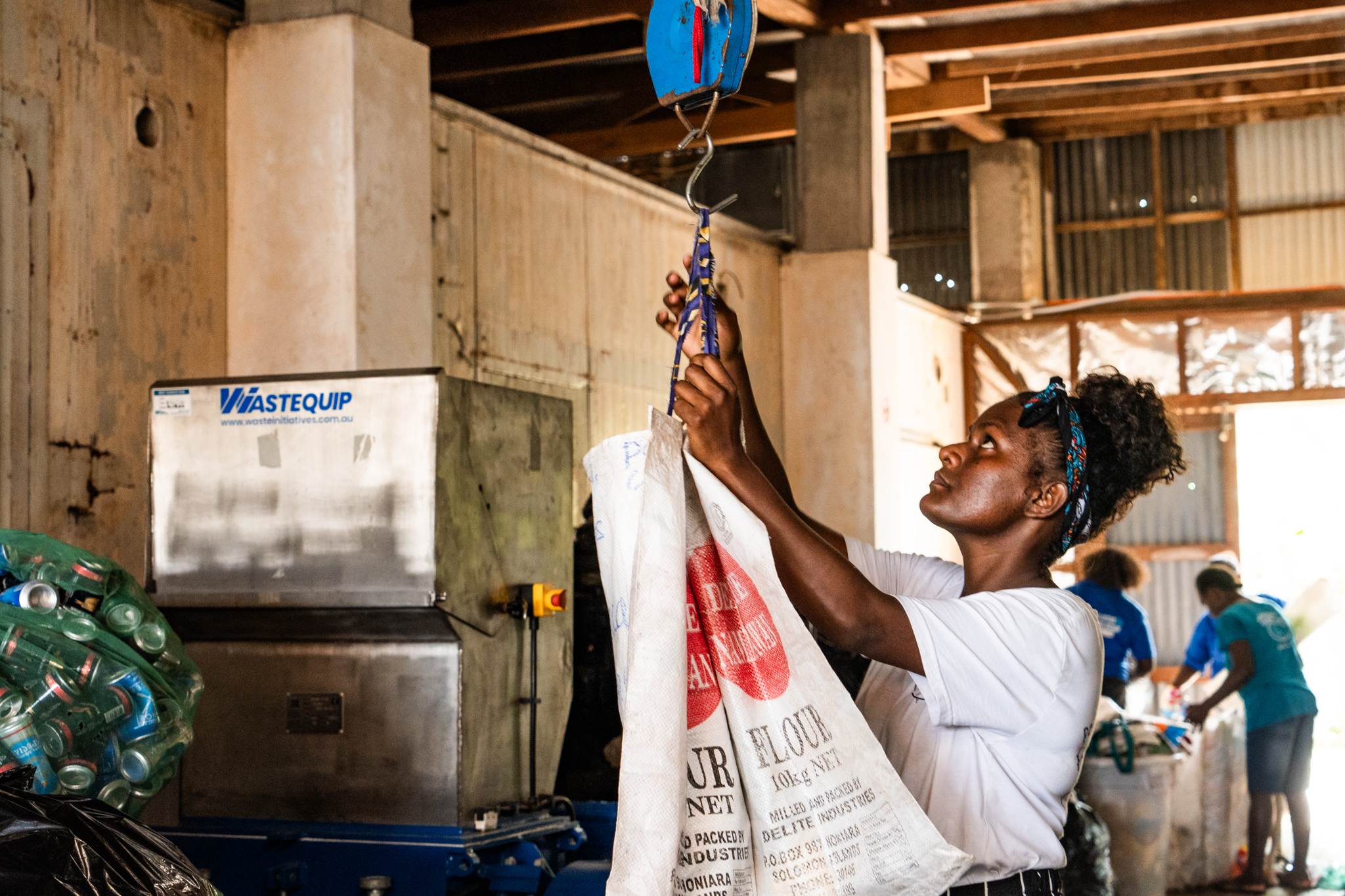
Sumana processing waste in Upcycle Hub, Gizo Island Solomon Islands. Source: PCFML
What have been the biggest changes you have witnessed throughout your time in the development sector, specifically in relation to your area of expertise?
Over the past few years, one of the biggest changes I’ve witnessed is that people in the Solomon Islands are speaking more openly about the pressures they are experiencing, from worsening climate impacts to growing waste challenges along our coastlines. When I first started, many communities didn’t fully understand the severity of these issues. Now, the impacts are being felt directly, and there is a strong desire to learn, adapt and protect our island for future generations.
I’ve also seen significant shifts in the global development space. When our PCFML team attended the UN Ocean Conference last year, it was encouraging to see more Pacific Islanders contributing to the international conversation. A common theme among us was that, while climate and development finance continue to grow, there are still many hurdles in getting resources into the hands of local communities who are ready to act. From complex application processes to limited capacity support, the pathway is not always straightforward, yet the willingness, knowledge and commitment on the ground are stronger than ever.
Across the sector there is now a clear movement towards locally led development, long-term resilience, and greater inclusion of women and youth in decision-making. These shifts reflect what we are experiencing at home: that communities are prepared and motivated to deliver solutions, and that empowering Pacific voices is essential to creating lasting change in waste management, climate adaptation and marine protection.
I believe this momentum will only grow, with Pacific people leading both the implementation and the global dialogue on climate resilience and sustainable development.
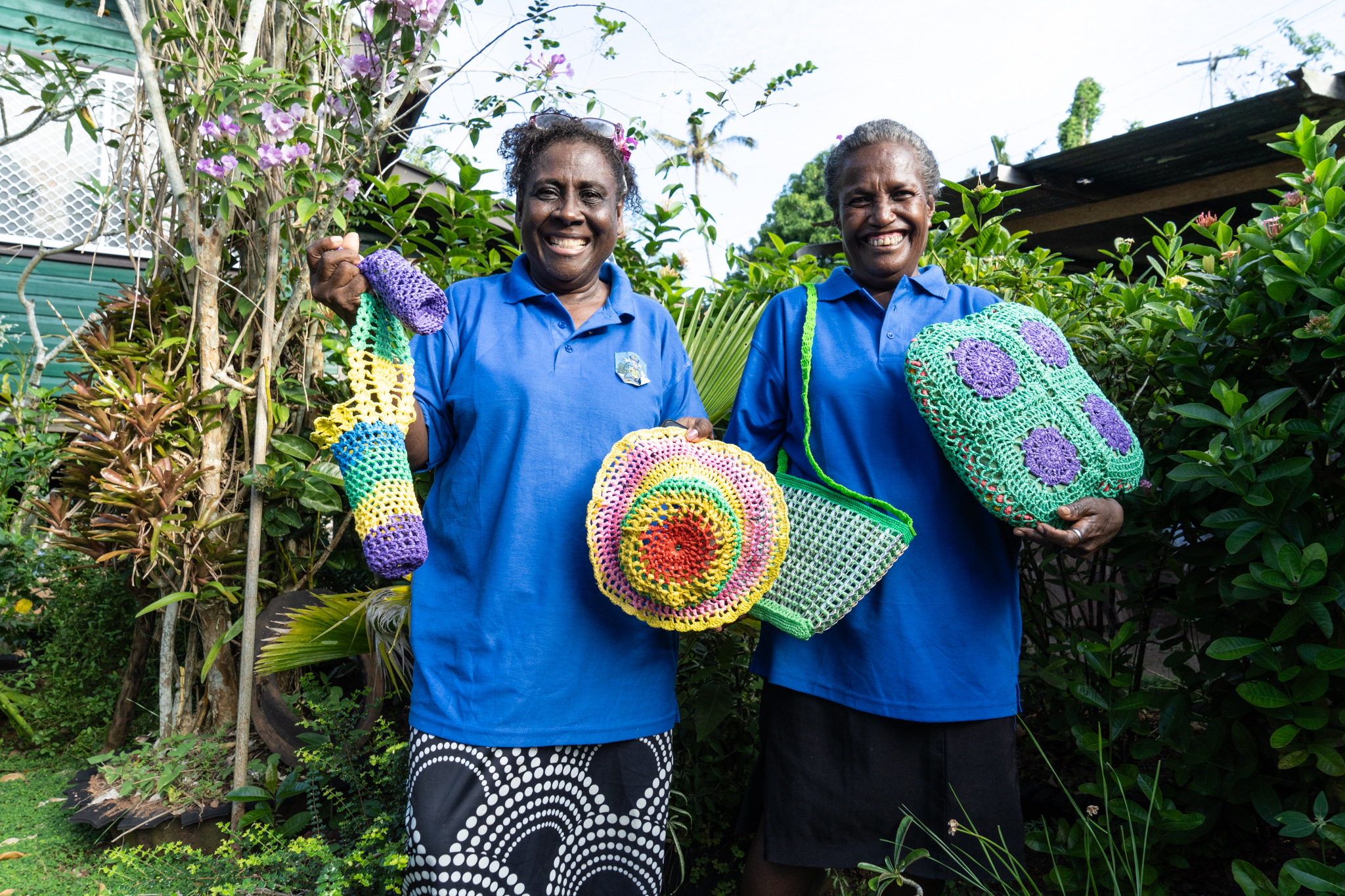
Plastic Wize Gizo Women Upcycled Products. Source: PCFML
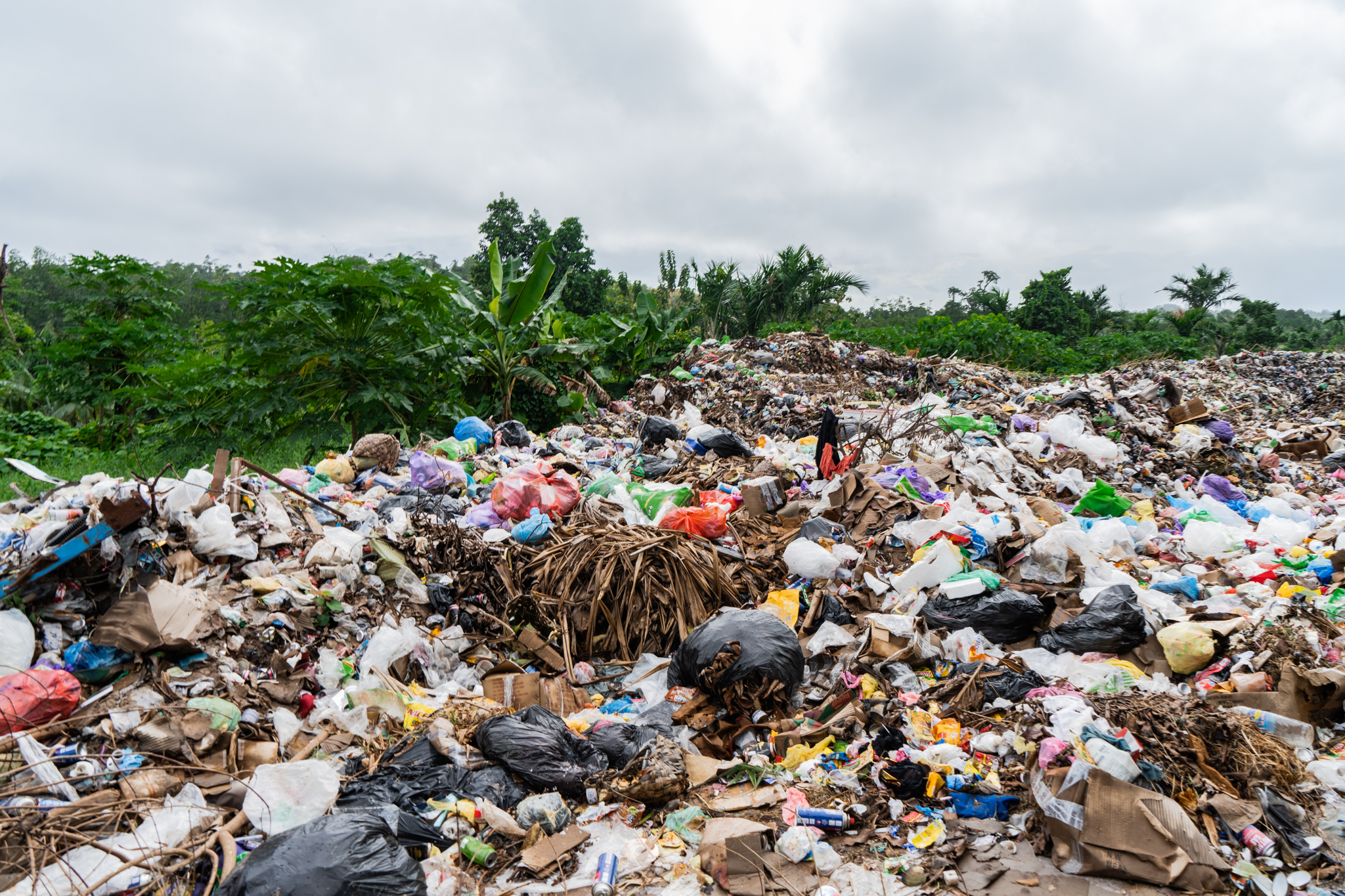
Landfill dumpsite in Gizo, Solomon Islands. Source: PCFML
If you could see one change in the international development sector occur tomorrow, what would it be and why?
If I could see one change, it would be stronger, longer-term investment in locally led solutions. Our communities often know what works and what will last, but we do not always have the resources to bring these ideas to life.
Much of our progress depends on international support. My own position, and the work of my team, was funded through international aid until ninety percent of our funding disappeared overnight earlier this year due to the withdrawal of USAID.
That experience showed me how vulnerable we are when funding changes suddenly, even when the community is motivated and ready to work. More flexible and community-driven funding would help us build programs that are stable, culturally grounded, and truly led by the people who live with the challenges every day.
AIDN’s ethos is “more” and “better” international giving from Australians. What does “more” or “better” international giving look like to you? (Feel free to answer with reference to “more” or “better” or both)
More giving means directing resources to the communities who are already living the frontline realities of climate change and rising seas — communities who often have the least access to services, infrastructure or global advocacy. In places like the Western Province of the Solomon Islands, even small investments can unlock enormous transformation.
Better giving means strengthening people, not just projects. It means investing in women’s employment and leadership, so that circular economy models, ocean livelihoods and environmental stewardship are community-owned long after a donor cycle ends. Better giving is multi-year and predictable so that communities can build social enterprises and local revenue streams with confidence, rather than fearing the next funding cliff.
A good example of “better giving” in action is the Pacific Resilience Facility — a Pacific-owned fund designed to support small, community-led resilience projects. What I admire about the PRF is that it was created with local realities in mind: it provides simple, accessible and predictable funding for things like coastal protection, circular waste solutions, and climate-resilient livelihoods. It’s the kind of model that allows grassroots organisations to plan ahead, build capacity, and strengthen local leadership. If more funding followed this approach, communities across the Pacific would be better supported to lead their own long-term resilience.
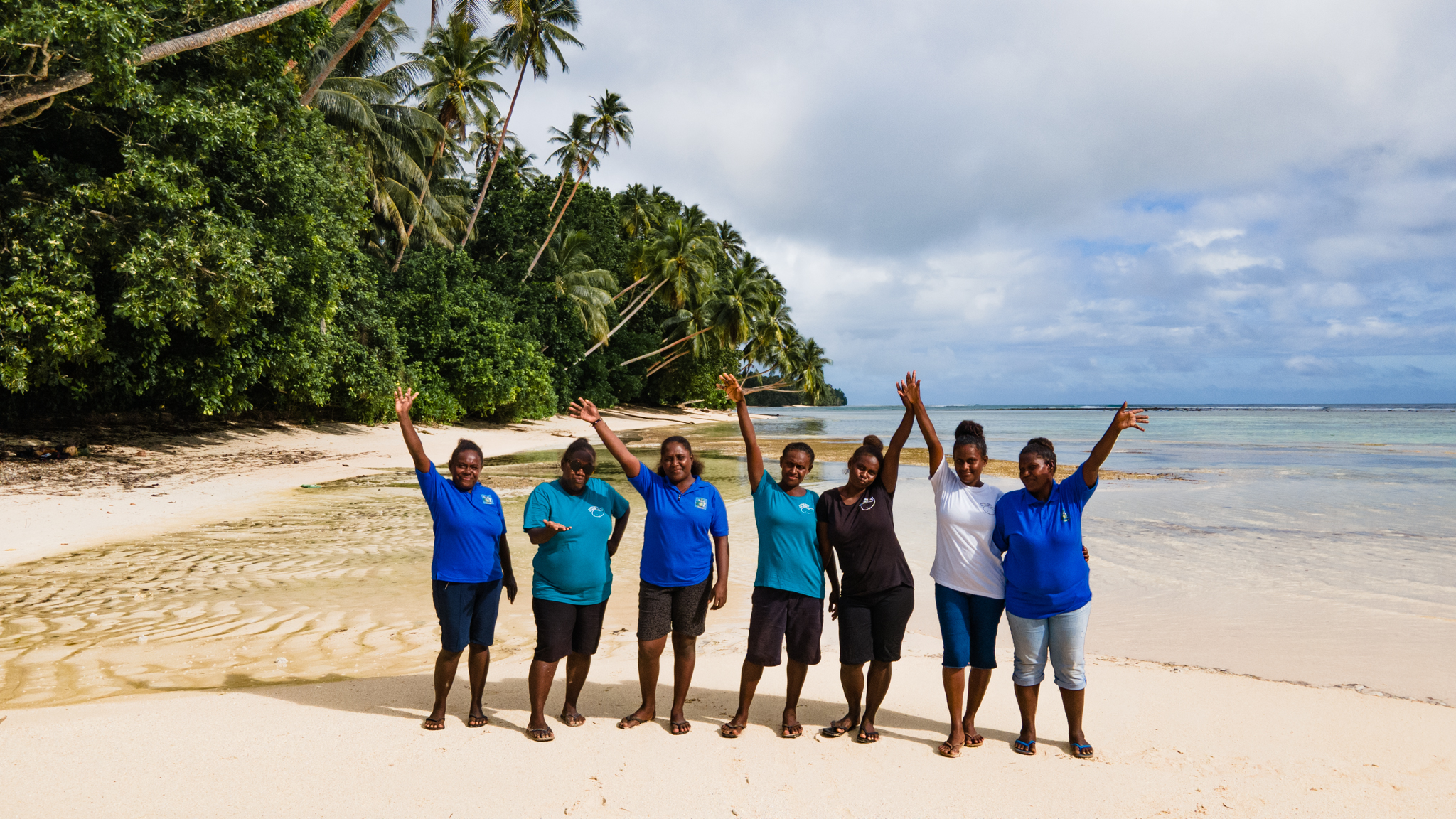
Women leading Positive Change for Marine Life’s “Waste to Wealth” program, Solomon Islands. Source: PCFML
Sumana Deni
Sumana Deni is a Waste to Wealth and Community Engagement Coordinator with Positive Change for Marine Life in Gizo, Solomon Islands. She leads the organisation’s Waste Collection Service program, the only community-run waste collection and upcycling service in the country.
Sumana works closely with women, youth, and families to transform waste into opportunity through composting, repurposing plastics, and running household waste collection. Her leadership has helped shift community attitudes toward waste, empowered women through new income pathways, and protected fragile coastal ecosystems.
In 2025, Sumana travelled to Australia to share her story — her first time leaving the Solomon Islands — where she represented the voices of women leading climate and environmental resilience across the Pacific.