How long have you been involved in the international development sector and what first inspired you to enter the sector?
I have always been fascinated with the world beyond our shores. When I was a child my Dad started a business importing food from all over the world. He was away for long periods and I would wait with baited breath for his return, for stories of his travels and the gift of a doll symbolising the culture of wherever he had been. My dream became working for the foreign service and after qualifying as a lawyer I joined the DFAT graduate program ensuring my first formal involvement with international development was via government policy. My first posting was to Poland, the then Czech Republic and Slovakia shortly after the fall of the Berlin Wall, a time of incredible transition, a stark lesson in what is possible when a people’s potential is unleashed. When I moved into the private sector, I continued my involvement in international development through philanthropy. Our family foundation, the Grace and Emilio Foundation has supported a range of international development initiatives – humanitarian crisis response, children’s vaccine programs in the Pacific, intermediaries like ygap that support local innovators to solve local problems and organisations that supercharge impact by funding women and girls.
What have been the biggest changes you have witnessed throughout your time in the development sector, specifically in relation to your area of expertise?
The increasing use by governments and the private sector of market based financial tools to address the UNSDGs has been a significant shift, enabling sustainable and scalable solutions to international development challenges. We have made a number of investments ourselves including in Good Return’s Impact Investment Funds and SWEEF Capital’s South Asia Women’s Economic Empowerment Fund. We love the potential to recycle capital and drive impact at the same time.
Another big shift has been the democratisation of giving through mechanisms like crowdfunding, enabling a more community‑centred, participatory model of philanthropy to develop. Alongside a number of partners, we love supporting The Funding Network’s and AIDN’s Women and Girls International Crowd Funding Events and look forward to doing so again in October 2026. I always get great feedback from people participating for the first time – they are inspired by the wonderful, grassroots organisations solving complex social challenges on a dime and they start to see themselves as agents of change, making a difference by supporting those organisations, in accordance with own capacity, as part of a community – an incredibly empowering and uplifting experience.
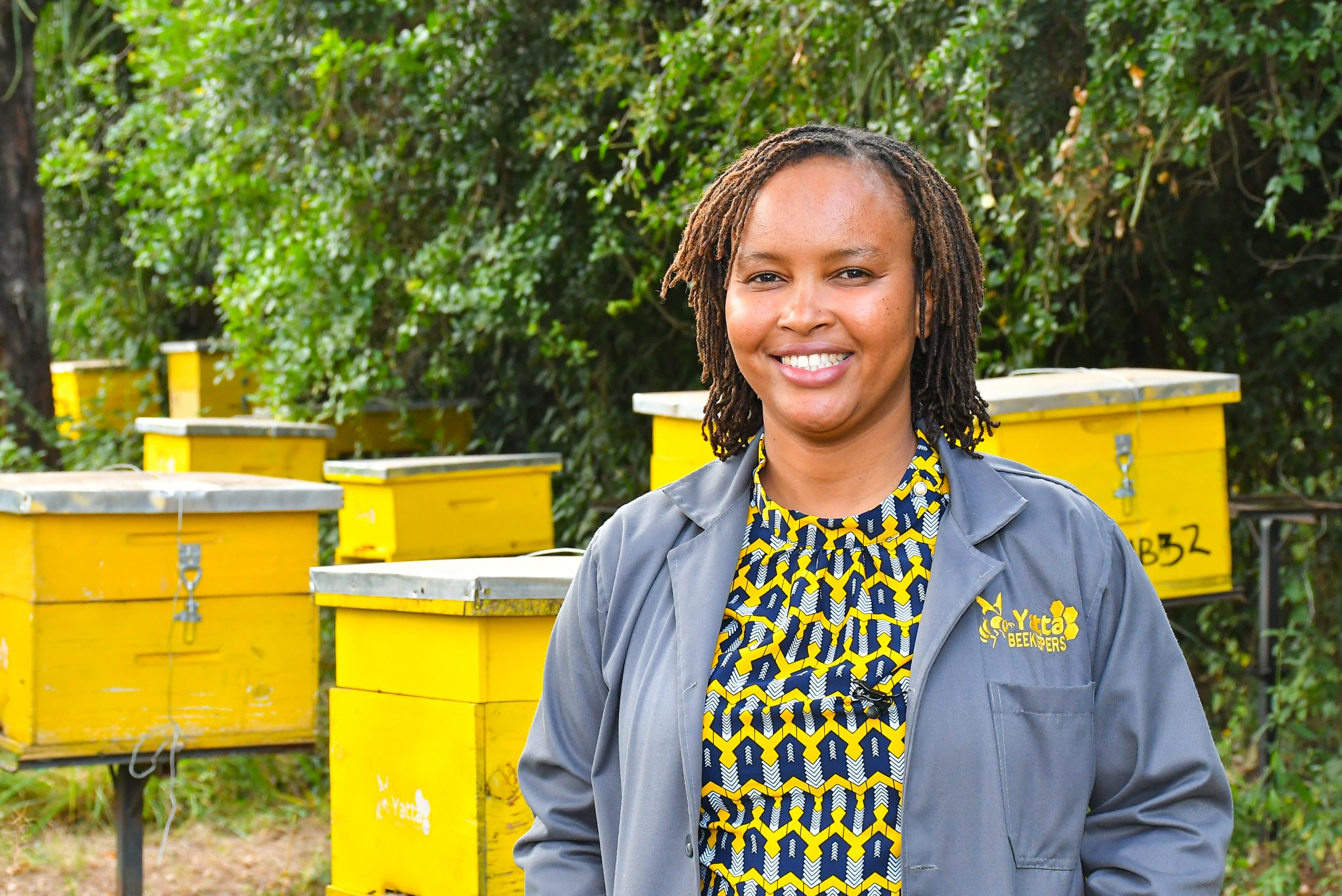
Ygap local innovator, Joanne Kinyanjui, founder of Yatta Beekeepers – creating sustainable livelihoods for women and youth through sustainable beekeeping (Kenya).
If you could see one change in the international development sector occur tomorrow, what would it be and why?
While I believe in the potential of impact investing to deliver positive social and environmental change, traditional forms of finance can leave the poorest people behind in favour of projects that are perceived to be safer in more lucrative markets. I would like to see more genuine innovation in the finance tools available in international development, like blended finance, and more funders willing to invest in them.
AIDN’s ethos is “more” and “better” international giving from Australians. What does “more” or “better” international giving look like to you? (Feel free to answer with reference to “more” or “better” or both)
My understanding of “better” giving has evolved significantly through supporting organisations like ygap – one of the few Australian organisations with local teams overseas that has genuinely flipped the traditional aid narrative. Learning from the 300+ local innovators that ygap has supported, my three biggest takeaways are:
- The people closest to the problem design solutions that endure, shaped by lived realities and local contexts.
- Support Australian leadership that transfers power and accountability to local teams, not just resources.
- Back innovation – we are excited to be supporting ygap’s AI-powered ‘voice of community’ platform that captures real-time community feedback in local languages—enabling local voices to shape solutions and create a live, responsive view of impact.
To me, better giving in international development means challenging our assumptions about risk and shifting the right form of capital to where contextual intelligence is strongest.
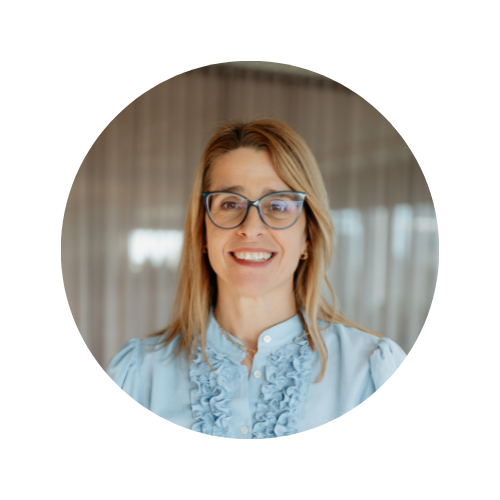
Cathy Scalzo is CEO of the Scalzo Family Office and Trustee of the Grace and Emilio Foundation. She is Chair of Australians Investing in Women, Deputy Chair of the Mornington Peninsula Foundation and on the board of the Social Impact Hub. Cathy served on the board of ygap for 6 years until 2025. Cathy was previously General Counsel of Scalzo Foods, one of Australia’s largest privately owned food businesses, worked as a senior associate at Allens specialising in workplace and anti-discrimination law and was a diplomat at the Department of Foreign Affairs and Trade.