The island of Timor is more than an island divided by Timor Leste and Indonesian Timor in the west. As Fox (2003) highlights, the complex indigenous traditions portray the island both as a half-submerged crocodile, wary and waiting and also as Mother Earth “accepting, long-suffering, supportive of all who rely upon her”. Linguistically, there are similarities with the Austronesian languages of Timor, like Tetun and Dawan (the main language of West Timor), while the Trans-New Guinea languages, like Bunak, are spoken on both sides of the border between East and West Timor. The thirteen distinct indigenous groups on the island provide a rich diversity of cultures.
Timor’s physical environment is dictated by tectonic forces, as the Australian continental plate pushes Timor upwards a few millimetres each year. Its geology is derived from a range of marine sediments; remnants of coral reefs can be found at altitudes over 500m above sea level, in addition to dense marine clays that are infertile and crack in the dry season.
These infertile soils, coupled with a semi-arid monsoonal climate where the wet season lasts only four months, and rainfall is highly variable, means that a key priority for most communities on Timor is having sufficient access to water and producing enough food to sustain their household in the dry season. In development terms, inadequate access to safe water, poor or lack of sanitation facilities, and low agricultural yields form a destructive feedback cycle, including high levels of malnutrition and stunting. Regional predictions indicate that the drivers of these problems will only be exacerbated with the impacts of climate change.
I have seen the impacts of these challenges first hand in my role as Executive Officer of the Nusa Tenggara Association (NTA), a NFP founded in 1988 by a group of Australian and Indonesian researchers working to reduce poverty among rural communities in East Nusa Tenggara, Indonesia. Today, a team of 26 paid staff operate in West Timor and Flores, and it is clear that there is a critical opportunity for development NGOs working in Timor to share our experiences and expertise in order to support communities across the island, as the challenges are similar whether a community lives in Timor Leste or Indonesian Timor.
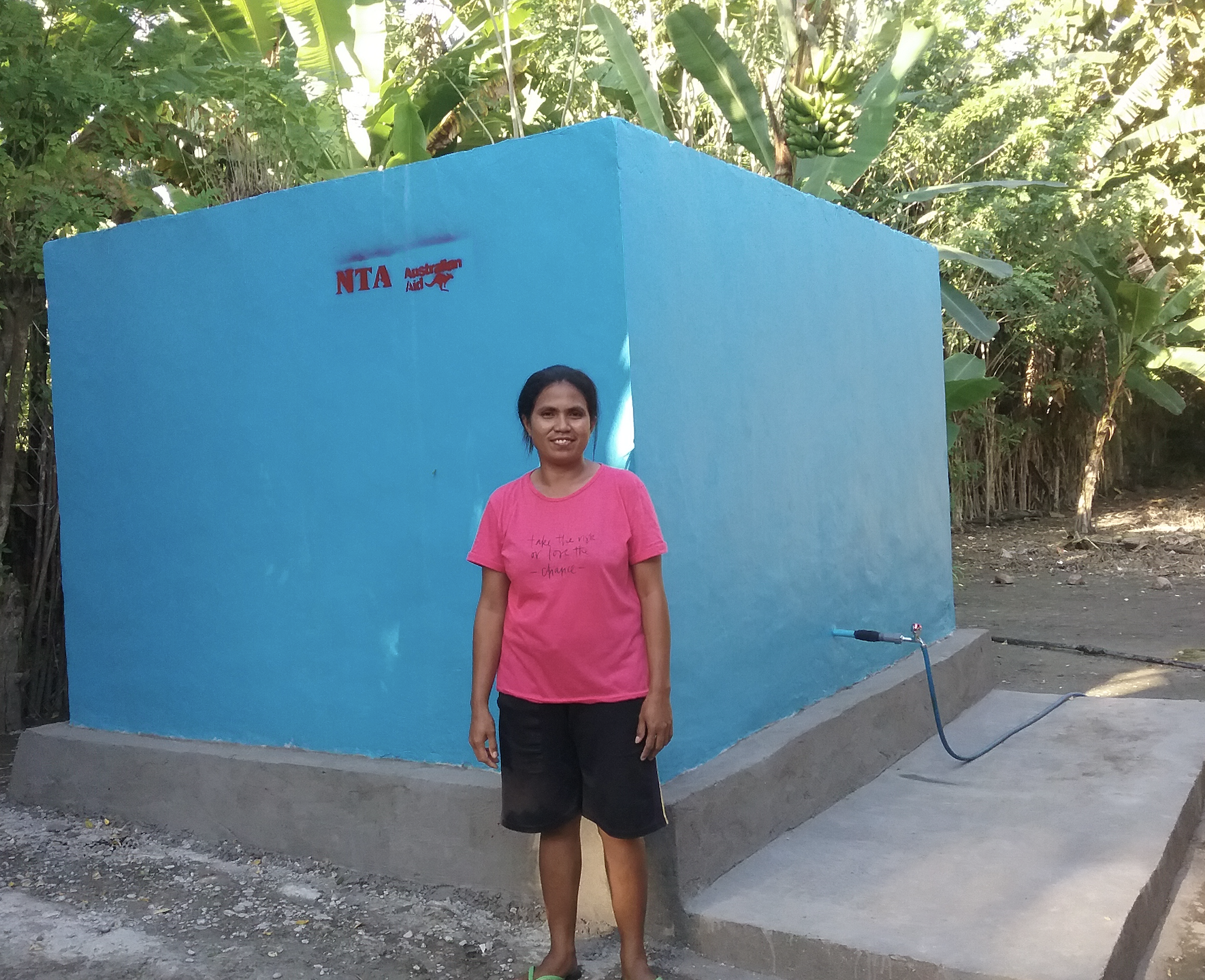
For example, since inception, the communities we work with have consistently identified potable water as one of the highest priority needs and pre-conditions to improved household wellbeing. With access to water, also comes access to improved WASH (Water, Sanitation and Hygiene) facilities. In Timor, only 70% of households and 30% of schools meet the criteria for basic sanitation. Constructing toilets not only improves hygiene and sanitation for the whole community, it also increases dignity, privacy and safety for women and girls. Through our work, we have seen the critical role of water access and sanitation in schools for ensuring the development of Timor’s education system. Globally, research shows that improved sanitation facilities significantly reduce missed days of school for adolescent girls and supports them to continue their education (Sharma et al. 2024; Davis et al. 2018).
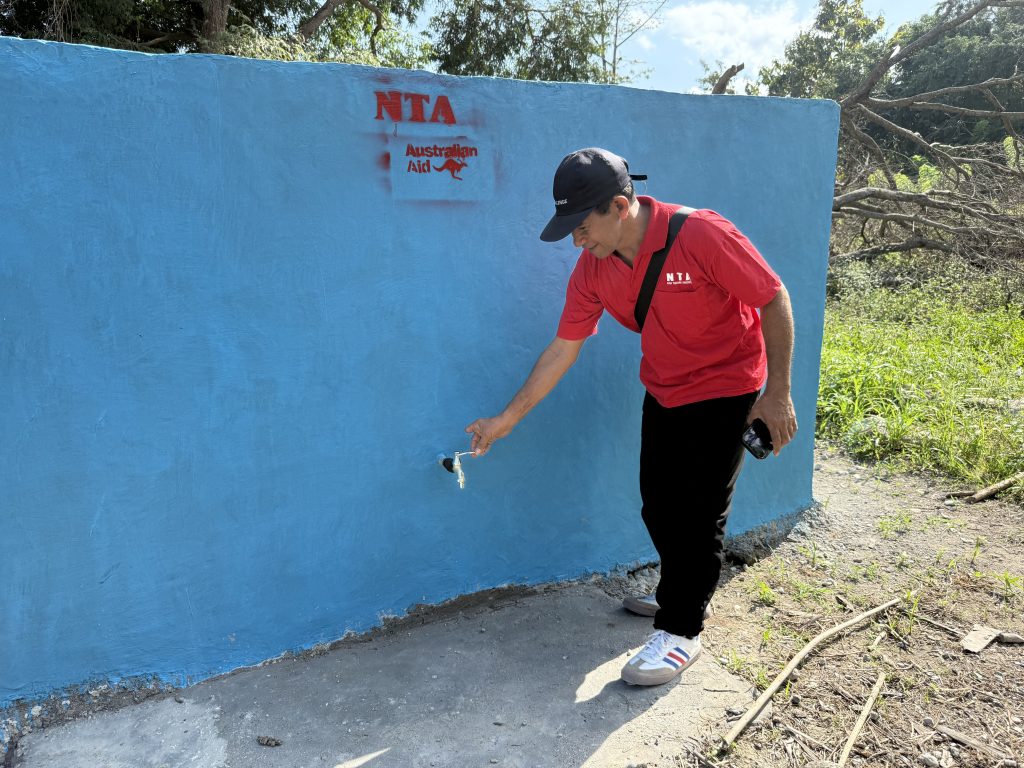
This is why our teams at NTA have focused on assisting households to construct their own 15,000-litre tanks to store rainwater. This is why we build community friendly toilets and encourage households to construct toilets that meet all family members’ needs, including installing handrails and raised pans or seated toilets for easier access. And this is why NTA supports schools to improve access to water, and build or renovate toilets that are sex-segregated to meet the needs of all students, especially girls.
Importantly, however, long-term programming and collaboration are key to the sustainability and scalability of these approaches. As is often the case in development programs, support to communities in Timor is often dictated by the availability of short-term funding, with many projects having a maximum lifespan of five years. Organisations are required to quickly move on to new communities and initiatives, leaving a community after just one to two years of support, without adequately addressing the challenges or meeting the needs of the poorest households or most vulnerable community members. At NTA, our experience has reinforced the importance of tailored approaches to community development, including in-depth participatory consultation with rural farming communities and spending at least 10 years in a village before exiting.
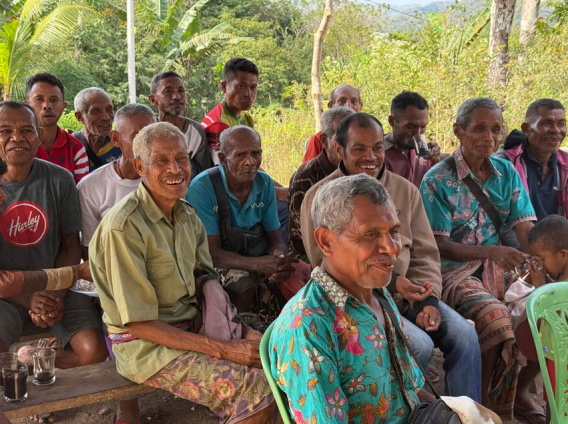
With a challenging natural landscape and the increasing impact of climate change, collaboration between development actors and a focus on long-term relationships with communities is likewise only becoming more critical. There is, and will continue to be, real value in sharing expertise on design and durability of water tanks and WASH facilities in Timor. For example, working with mature local organisations established over 20–30 years ago, such as our peak implementing partner, Yayasan NTA Indonesia (NTA-I) and Yayasan Pengembangan Masyarakat Pulau Semau (YPMPS), in addition to local government agencies, BRIN, and bigger NGOs, such as Wahana Visi, Kopernik and 1000 Days Fund, has further underscored the importance of designing programs to complement village governments or local government priorities to ensure the sustainability and strength of programs long after we exit a community.
We have also learnt that change is gradual, relational and must be culturally sensitive. When we first demonstrated the use of tanks to store rainwater over 30 years ago, many households were reluctant to use rainwater. Women would spend 1–3 hours a day carting water for household needs from springs or rivers up to 5 kms away from the house. Since then, the demand for appropriate water storage systems within the communities where we work has become so strong that most households contribute up to 50% of the construction costs. Village governments have also been increasingly contributing to water tank construction. To date, 1,646 tanks have been installed and counting.
An island surrounded by ocean in the Timor Sea, water has always played an important role in Timor’s culture, landscape, health and wellbeing. Access to water and WASH facilities remain one of the highest priorities to address in Timor’s development. NTA alone has over 30 years of experience on the island of Timor, supporting various communities in building self-sufficiency to live and thrive. With a demanding natural landscape and the increasing threat of climate change, organisations working across Timor must work together to build on one another’s experience and expertise, strengthening the quality, durability and long-term impact of development approaches to water access, sanitation and livelihoods.
 Phil Domaschenz holds a degree focused on natural resource management and has been the Executive Officer for NTA for the past 10 years. He was employed for 30 years within the Australian Government at local and national levels and worked in areas focused on the management of urban landscapes, forests, national parks and fisheries. His employment has covered Indonesian natural resource issues for 25 years and he was seconded to Indonesia for a year as Programme Management Specialist for a national coral reef management programme.
The Nusa Tenggara Association (NTA), established in 1988, is a non-governmental development organisation operating across rural communities in West Timor, Semau Island, and Sikka Regency in East Nusa Tenggara (NTT) Province, Indonesia. Working through its main in-country partner, Yayasan NTA Indonesia (NTA-I), the organization employs a bottom-up, participatory, self-help model that partners with small community groups (kelompok) and schools across four core program pillars: Income Generation and Food Security, Water and Sanitation (WASH), Education Support, and Capacity Building. The official mission of the NTA is to reduce poverty and vulnerability amongst communities in rural areas of Nusa Tenggara Timur Province through facilitating and supporting sustainable income-generating activities, food security activities, access to water and sanitation, and education support.
If you are interested in finding out more about the NTA and collaborating or supporting us, please contact us at enquiries@nta.org.au or visit www.nta.org.au
Feature image: A household water tank built in South Central Timor in 2025. Source: NTA.