How long have you been involved in the international development sector, and what first inspired you to enter the sector?
I first entered the development sector when I was studying Psychology in Gadjah Mada University-Indonesia back in 1997. I was a volunteer working with low-income and underserved street children with Plan International Indonesia. My task was to assist, play with and accompany one 4 year old girl who had been orphaned at a young age and now lived with her aunty. Spending time with this young girl and slowly seeing her confidence grow each week through attending weekly regular activities motivated me to continue this type of work. Here I am now, with over a decade serving in the development sector, including working on education, gender equality and inclusion, psychology, social protection and health.
What have been the biggest changes you have witnessed throughout your time in the development sector, specifically in relation to your area of expertise?
I have observed several positive changes happening in the sector throughout my career.
I have witnessed an important transition from gender blind programming to GEDSI (Gender Equality and Social Inclusion) sensitive programs. Compared to 15 years ago in Timor-Leste, Gender Equality and Social Inclusion has gradually become a mandatory and cross-cutting framework in most development programming. While there is still room for GEDSI to be effectively implemented in rural communities, the increased focus on GEDSI in Timor-Leste has grown in tandem, but also influenced, successful advocacy to government on gender equality sensitive policies, gender budgeting and community understanding. It has also helped to provide the space to girls, women and people with disabilities to voice their concerns, provide solutions to their challenges and make necessary decisions.
The strength and quality of data analysis for decision making processes has also marked an important change in our sector. Compared to 15 years ago, there has been significant change with how data is collected to evaluate programs and the availability of various monitoring and evaluation tools. This has been crucial for better decision making, strategy and advocacy. This has been true with regard to our work at Maluk Timor, where we work alongside the Ministry of Health to strengthen the primary health care system through HIV triple elimination, non-communicable diseases (rheumatic heart disease and oral health), maternal and child health, tuberculosis (TB), and professional development for health workers.
Since Timor-Leste’s independence in 2002, there has also been an important shift in development programming: from a focus on ‘projects to ‘programs’- underscoring a commitment to long-term sustainability in the sector. Shortly after independence, development aid often arrived as discrete ‘projects’ with set timeframes. This created a mindset within the community of understanding all foreign aid as ‘foreign projects’, not owned by the community and with no continuation after the project end date. In line with Timor-Leste’s 2030 National Development Strategy, development projects are now understood as programs: ensuring strong partnerships among implementing partners, donors, private sector, government and communities.
Finally, the role of young people and youth in development has changed significantly. When I first started working in this sector in 2003, young people and youth were mainly recipients of development programs. Today, young people and youth in Timor-Leste are not only beneficiaries but also actors and active leaders in development. They are more vocal on the realisation of their rights and lead various youth movements focused on social protections, human rights, climate resilience and GEDSI. This shift has been, and will continue to be, crucial for fostering Timor-Leste’s future leaders.
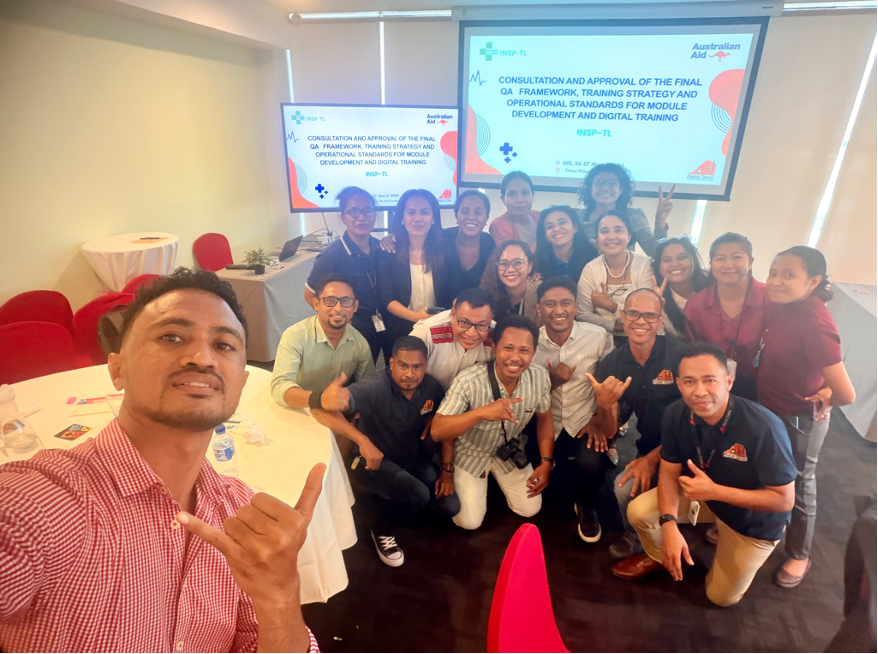
Caption: Approval of our SOP and training quality framework of our Digital In service Clincal and non-clinical excellence programs.
If you could see one change in the international development sector occur tomorrow, what would it be and why?
I would like to see a change in the way development programs are designed to have a more sustained and rigorous focus on holistic approaches, sustainability and cross-sector partnerships.
At Maluk Timor, we regularly see how health sector outcomes are strongly impacted by educational, social and economic factors. These are not discrete or separate spheres of the development sector. Instead, we must focus on ensuring that these different, but interrelated, spheres of the development sector are designed and funded to work in tandem. This holistic approach will allow all relevant parties (government, donors/development partners, implementing partners (CSOs, Private sectors) and communities) to gradually change their mindset from projects to programs, and from programs to sustainable programs that can holistically benefit Timor-Leste’s community at large.
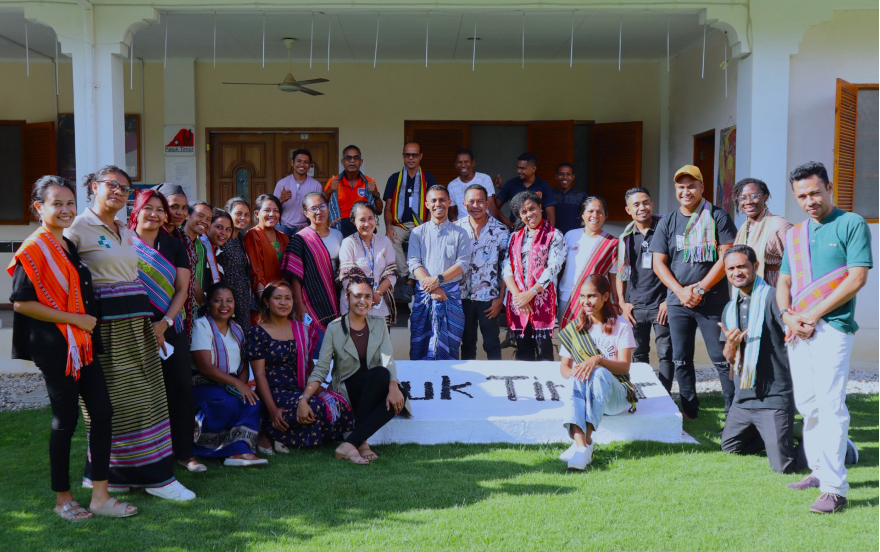
Caption: Maluk Timor team celebrating independence day using our traditional cloths.
AIDN’s ethos is “more” and “better” international giving from Australians. What does “more” or “better” international giving look like to you?
For me, “more” and “better” international giving means continuous and long-term support with sufficient time to create sustainable change. In Timor-Leste, creating sustainable change will not happen overnight. Nor will it happen if different spheres within our sector (such as health, economic and social) are siloed. Instead, it means transforming the mindsets and long-held attitudes of community, government and organisation.
For example, Maluk Timor’s Maternal and Child Health Program, implemented with the Railako Health Center, aims to strengthen the overarching primary health care system. To do this, we support a monthly “Programa Integradu Saude-Health Integrated Program” (PIS). This PIS is not only about working with pregnant women, mothers and babies to screen for malnutrition, but also employs a holistic approach that centers education, health and gender. This means we also work with men and fathers’ groups within the community to discuss the important role of males in supporting the nutrition and health of young families.
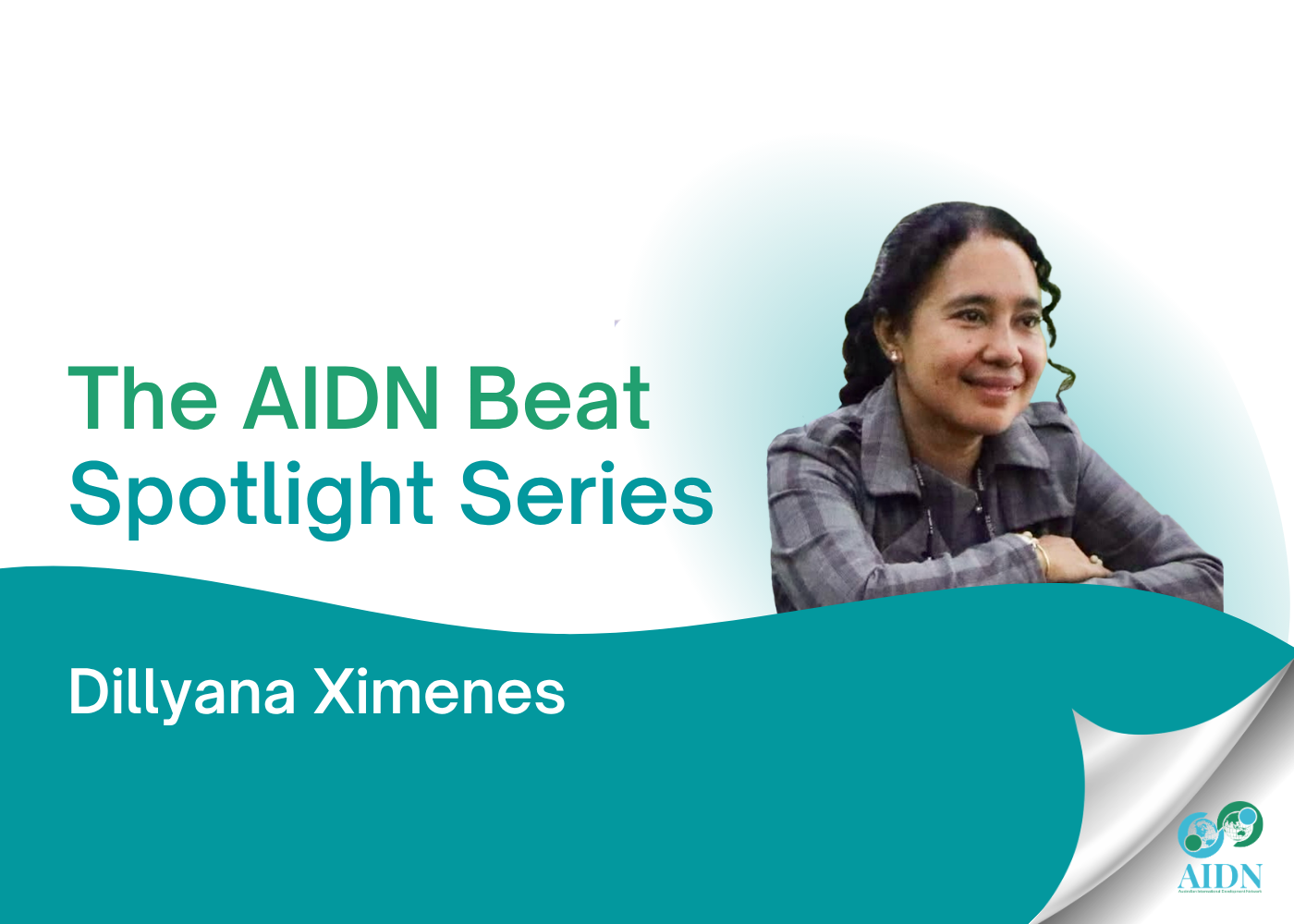
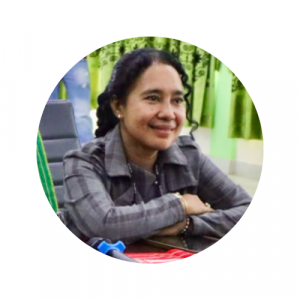 Dillyana Ximenes, is a development and humanitarian leader from Timor-Leste with more than 20 years of experience working across child protection, gender equality, health, education, climate resilience, and youth empowerment.
After graduating in Psychology from Gadjah Mada University in 2002, she began her career supporting trauma survivors at Timor-Aid, followed by a role with Health Alliance International. In 2010, she joined Plan International in Timor-Leste, progressing through senior program and leadership roles before becoming the organisation’s first local Country Director, a position she held for five and a half years.
Her leadership with Plan International expanded regionally, including serving as Interim Regional Director for Program and Influencing for Asia and the Pacific in 2023 and as Plan Pacific Director, overseeing programs in Fiji, Solomon Islands, and Bougainville-Papua New Guinea. She subsequently returned as Country Director for Plan International Timor-Leste in 2024.
Dillyana is passionate about advancing the rights of girls and women, locally led development, and climate and disaster resilience. She has led initiatives addressing gender-based violence, girls’ climate action, safer cities, and community resilience across Timor-Leste and the Pacific.
In February 2025, she became the first local Executive Director of Maluk Timor, supporting efforts to strengthen Timor-Leste’s primary healthcare system. She also serves on the boards of Klibur Domin, Mane ho Vizaun Foun, and Youth Alliance for Change.