
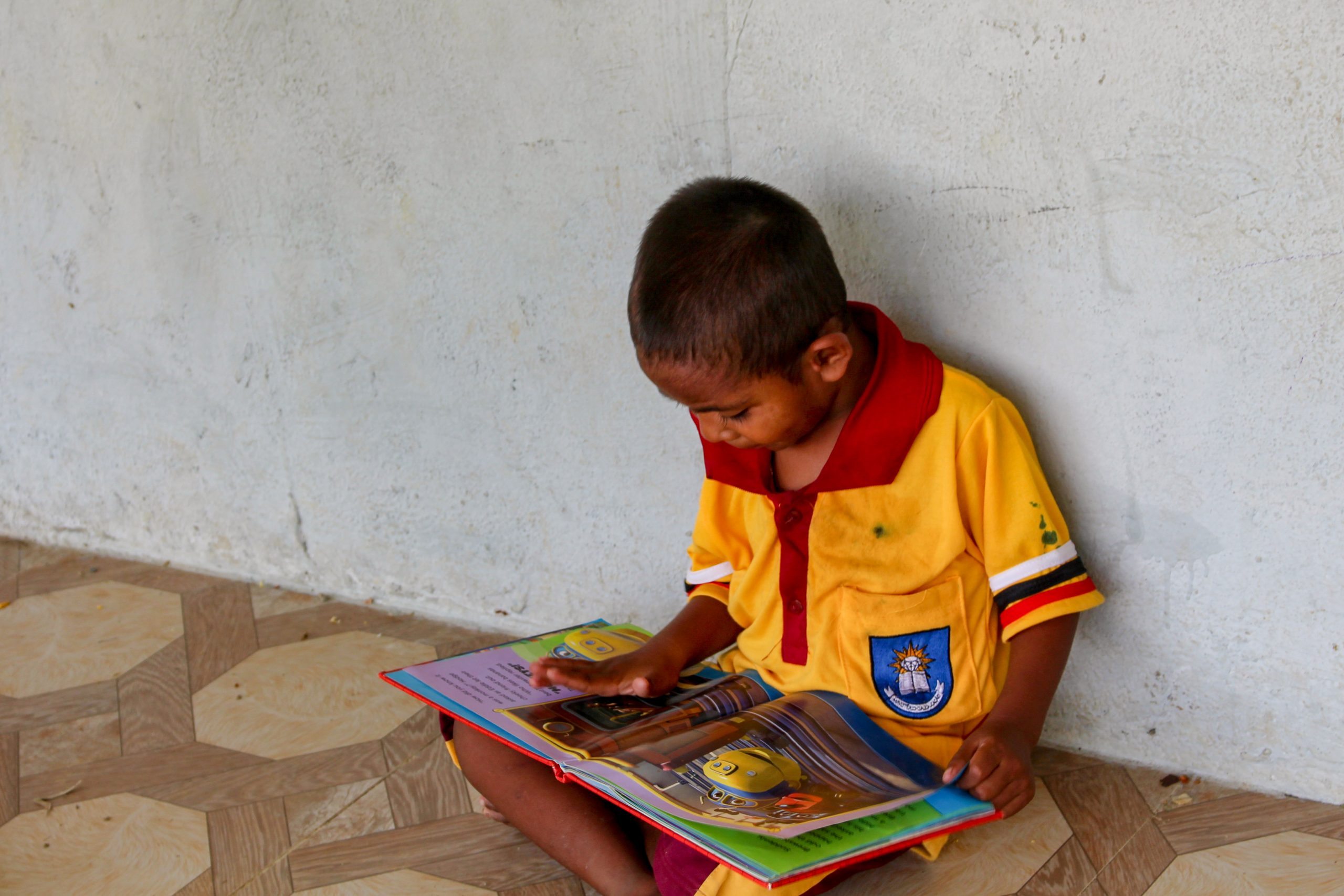
Educating the Future is an Australian and Timorese not-for-profit organisation working to transform the lives of children in Timor-Leste through addressing an urgent and underfunded pre-school education gap. The seed for Educating The Future started after Australian co-founders Adam Hegedus and Alexi Piovano first visited Timor-Leste in 2014 and met Cirilo Soares, a young leader from his community in Railaco, Ermera Municipality. Two years later, Adam and Alexi walked 800km from Sydney to Byron Bay days after finishing high school in Australia, raising an initial $20,000.
From that moment, together, Adam, Alexi and Cirilo set into motion over a decade of work: the building of eight public pre-schools educating 3000 children; the launch of a nation-first After School Program; the launch of the Australia and Timor-Leste Youth Dialogue five years running; and the securing of small grants including from the Australian government to empower young people and communities in Timor-Leste.
Since 2014, Educating The Future has also become a member of the Australian Council for International Development (ACFID) and built a strong base of Australian and Timorese volunteers – around 300 since inception. Several of these volunteers have since become employees, including the co-author of this piece, Frenky de Araujo, who now works as full-time Program Manager.
Catalysing a process of localisation.
More recently, Educating The Future has also begun a formal and dedicated localisation process, going beyond rhetoric and into action. A process of handing over leadership, operations and power to local leaders – not only because those closest to the problem have the best solutions – but because we wanted to ensure that Educating The Future is sustainable and continues well into the future, beyond the goodwill of volunteers that small organisations are often built on.
And this is why we, Frenky and Adam, have taken on this piece as an opportunity to co-reflect on this process of localisation. We have learnt a number of lessons, particularly when it comes to trying to fund our work into the years ahead.
Localisation means ownership.
In the Timorese context and language, localisation means ownership – communities and local staff having real decision-making power over their own development, rather than simply receiving a fixed program designed elsewhere. Too often, international development projects arrive in Timor-Leste with a plan already made, and the community is left to receive it rather than shape it. Budgets for on-the-ground activities are often strict and inflexible, given how little trust and risk is currently extended to local leadership. Genuine localisation has to go beyond individual projects; it needs to be built into the system of development, and it needs organisations arriving in Timor-Leste to come with real knowledge of its context, history and language. It means communities setting the development agenda for their own villages and being led by local people rather than treated as passive participants.
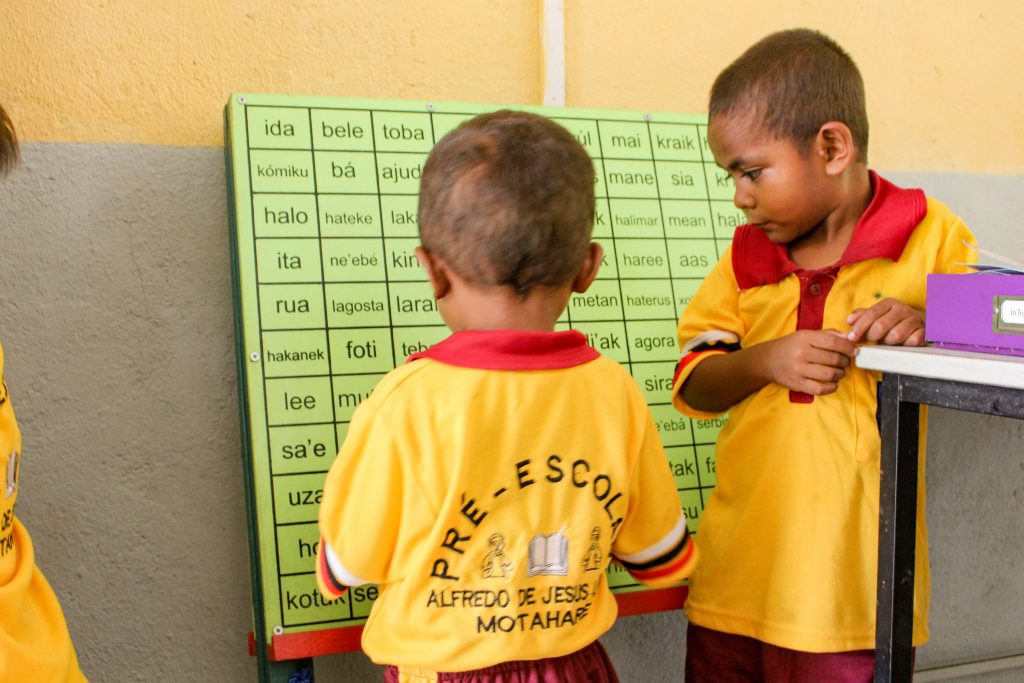
Localisation as a long-term and relational process.
Local leadership works, and we’ve seen why: it makes coordination easier, builds ownership, and earns trust from both community and government. It gives local staff real confidence in decision-making. And, perhaps counterintuitively, it earns trust from international donors too, because it de-risks the program and shows that local teams are more than capable of delivering it themselves – often at better value for money and longevity, which are metrics familiar to international audiences. Together, we were invited to meet President Jose Ramos Horta in 2022 and present our national pre-school program, symbolising our cross-border working relationship.
In practical terms, however, we have also found that localisation does not happen overnight. Localisation is often framed as a technical shift: hire local staff, fund local partners, hand over the paperwork. We’ve come to see it as something bigger and more relational – local is not opposed to international yet exists within webs of power. This matters because too many programs collapse the moment international funding stops, and the exit itself can do harm. For us, it also means, handing over the keys to our social media accounts, to greater visibility on financial approvals, being a supporter rather than a leader on annual strategic planning.
Australian-Timorese relations as continuity.
In our case, localisation has meant continuing to work together across Australia and Timor-Leste – not only out of solidarity, but out of genuine need for our small, volunteer-led, NFP’s continuity. This is particularly true in the early phases of the process. Funding continues to primarily, if not solely, come from outside of Timor-Leste, and Australian volunteers tend to have more fluency in the language international donors expect, including pitching with ease in English. Two decades of aid dependency, short program timelines, and limited local ownership have made sustainability an ongoing challenge. That’s why we’ve focused on gradually handing over tasks with a mutually agreed plan, rather than a single, symbolic transfer of power.
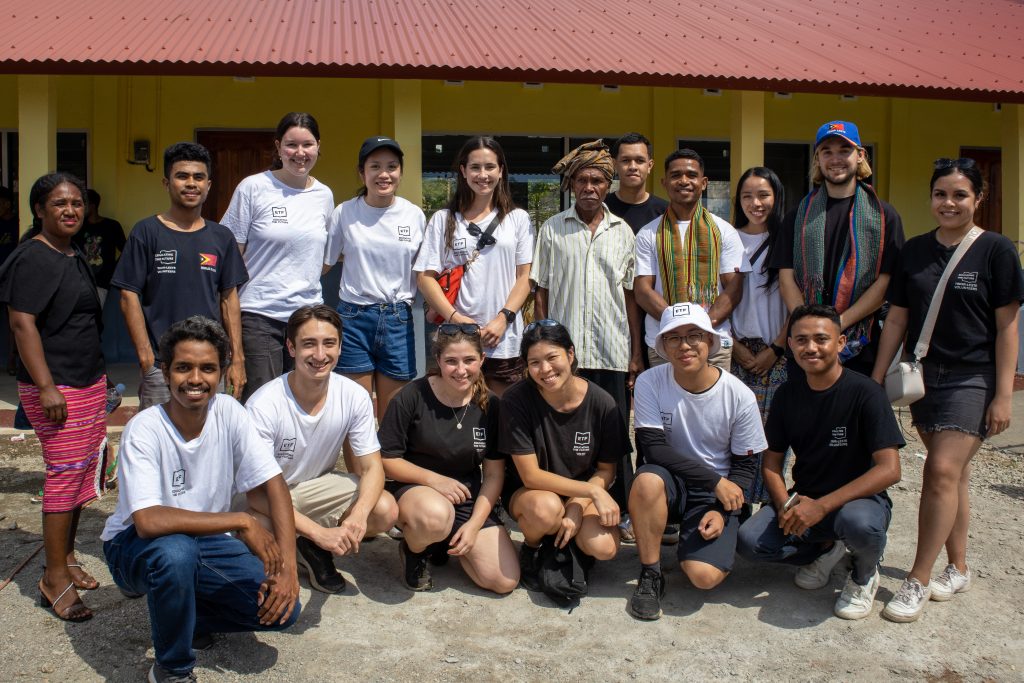
Localisation as a process of skills transfer.
There’s a harder truth too. Roles at NGOs in Timor-Leste often look different from what the local economy and system can offer, and many Timorese graduates struggle after finishing their studies, in part because organisations look for different things than what’s experienced on the ground. They are not short of work, but jobs.
That leaves fewer practical learning opportunities for Timorese staff, even as volunteers, and can leave people without the confidence to step into roles themselves. In practice this has meant that, in our experience, localisation isn’t just about handing over power – it is also about providing new opportunities and building the confidence of local staff to lead and manage, giving local youth practical experience in seeking funding, writing grant proposals, program management, monitoring and communication. It starts by reflecting on the country’s history and context and how that might translate into different outcomes for its people than the proscribed proforma that is so readily transplanted across jurisdictions, which often shows up as a standard localisation plan.
This is where ongoing international exchange and learning can also continue to play a meaningful role. During his ten years with the organisation, Cirilo, Co-Founder, spent five years in Australia working for the Pacific Labour Program and volunteering from abroad before returning home and applying these skills. He is now the current Country Director of Educating The Future, running a national organisation with staff of his own. The Australian-Timorese relationship has so much to offer, and we’ve also seen this through our pioneering Timor-Leste Australia Youth Dialogue.
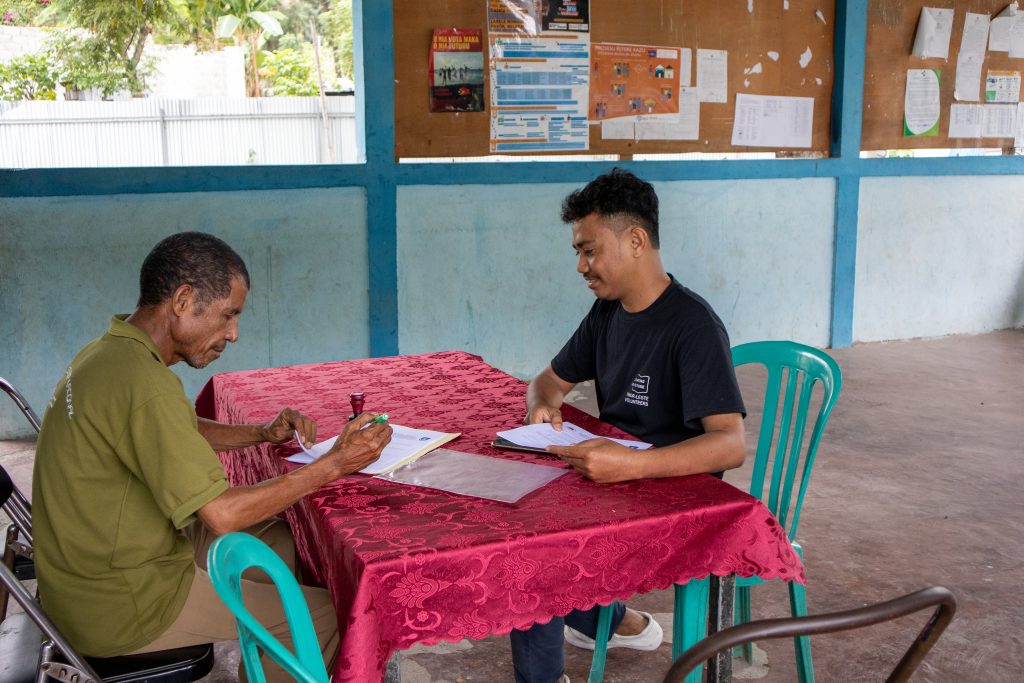
Next steps.
Ultimately, our push toward localisation is driven by both internal commitment and external necessity. Now it has moved from rhetoric into action, and into a relational understanding of power between our two bases: geographic and more importantly, where decisions are made. This includes over budget and risk. We know what still ties us to our base in Australia, and until we solve the puzzle of financial sustainability – keeping the program running, staff paid, and international trust intact – we will keep working in symbiosis: in solidarity, mutual respect and accountability with one another, for the sake of the 72,000 children in Timor-Leste who still don’t have access to a pre-school education.
Our goal is to be led and run by Timorese people, and importantly, done sustainably. It takes time to get it right and ensure we exist for another ten years. We hope the global shift follows suit.
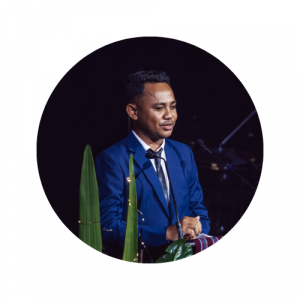 Frenky de Araujo was born during the crisis where Timor-Leste just got independence from Indonesia’s occupation in 1999. He grew up in the small town named Pelet, located in Covalima Municipality in the Southwest Timor-Leste. His childhood time he has no opportunity to access to early childhood education, directly entering into primary school in 2005. He has walked about an hour to reach the school; his school has no chairs, tables and limited learning tools. With this past experience’s challenges access to education, motivated him pursue Bachelor’s degree in education from Universidade Dili in 2024 to become a teacher.
Throughout his academic journey, Frenky has participated in several international exchange programs in Japan, Malaysia, Thailand, and the United States of America. While in university he has volunteer with several youth groups across Timor-Leste, delivering educational training include leadership, English language and soft skills development to empower the children and youth.
With more than three years of professional experience, Frenky has worked with international organizations including WorldFish, World Vision, and Educating The Future. In various roles, he has contributed to the planning and implementation of community development projects, working closely with communities and partners to support inclusive development and improve people’s well-being across Timor-Leste.
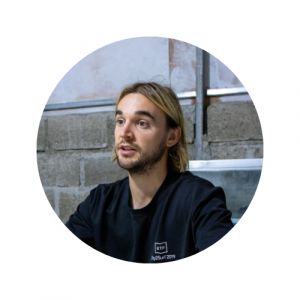 Adam Hegedus is Co-Founder and volunteer CEO of Educating The Future. He is also an Elected Member of the Australian Council for International Development (ACFID) Code of Conduct Committee, a Non-Executive Director of This Life Cambodia, and works full-time as General Manager and Company Secretary of Teach Us Consent Global. He completed his Master of Public Policy and MBA from the University of Oxford, and holds a first-class Honours from the University of Sydney on the topic of ‘Boards and Gender Equality’. Adam specialises in education, prevention of gender-based violence, governance, international development and policy.
Educating The Future is an Australian founded not-for-profit providing pre-school education in Timor-Leste to over 3000 children since 2015 and is a member of the Australian Council for International Development since 2020. The organisation has built and supports eight public pre-schools and runs Timor’s first evidence-based After School Program improving educational, social-emotional and developmental outcomes for youth and communities. The organisation also founded the Timor-Leste Australia Youth Dialogue providing a regional forum for youth-led policy action. Educating The Future is run by paid staff in Timor-Leste who will in the future lead all aspects of the organisation when it is sustainable to do so, and was resourced by volunteers for eight years in Australia and Timor-Leste.