On Thursday 6th of August in The Studio, Walsh Bay, AIDN hosted 8 curated sessions of international development programming, open to all Global Impact Summit ticket holders.
An initiative by Charitabl. | The Easy Way To Give with founding charity partner World Vision Australia, this was a gathering of people who care deeply about creating positive change and are willing to share ideas, challenge assumptions, and learned from one another.
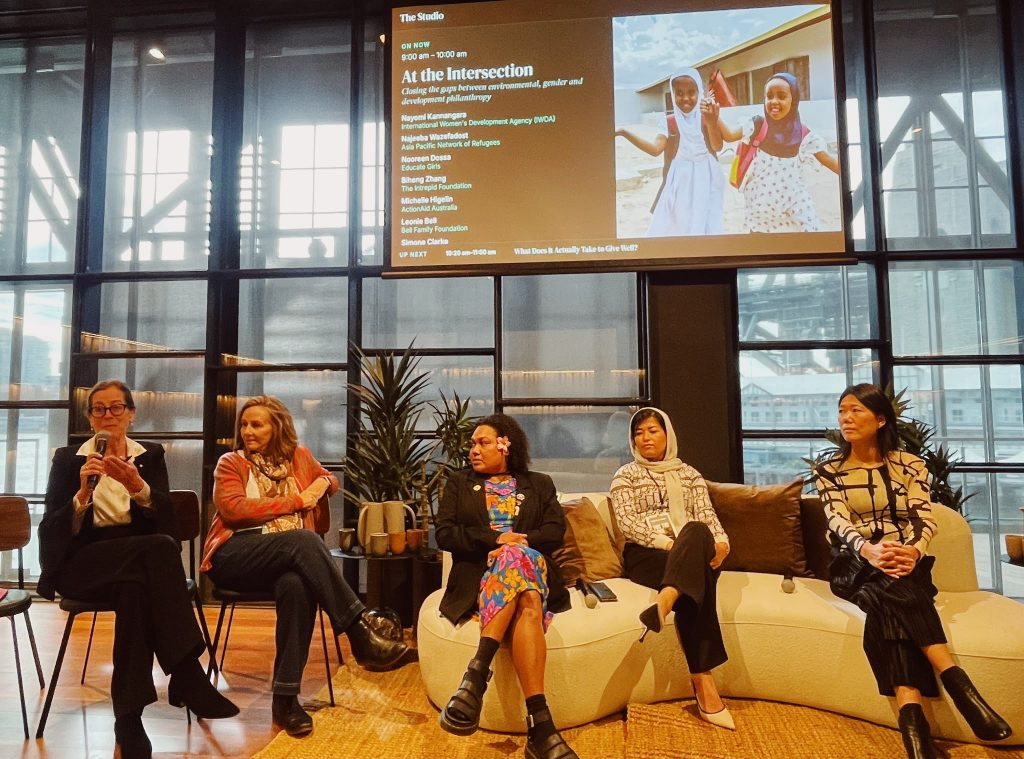
🌍 Session 1: At the Intersection: Closing the gaps between environmental, gender, and development philanthropy.
Climate change, gender inequality, and poverty don’t operate in isolation. They compound. We know that women and girls in low-income contexts are disproportionately exposed to climate shocks, carrying the heaviest unpaid burden when resources dry up, and they have the least access to the finance, land rights, and decision-making power needed to adapt. Yet they are also among the most effective agents of resilience in their communities.
Our session 1 cohort:
👉 Nayomi Kannangara, International Women’s Development Agency (IWDA)
👉 Najeeba Wazefadost, CEO, Asia Pacific Network of Refugees
👉 Nooreen Dossa, Regional Director, Asia Pacific Region, Educate Girls US
👉 Biheng Zhang, General Manager, The Intrepid Foundation
👉 Anna Demant, Principal, First Tier Media
👉 Simone Clarke, CEO, UNWomen
👉 Michelle Higelin, Executive Director, ActionAid
👉 Leonie Bell, Bell Family Foundation
👉 Mel Flanagan, Founder, Nook Studios
👉 Fifi Rashando, GEDSI and Safeguarding Manager, Opportunity International
👉 Julie Reilly OAM, CEO, Australians Investing in Women
👉 Tishiko King, Founder, Just Futures Collab
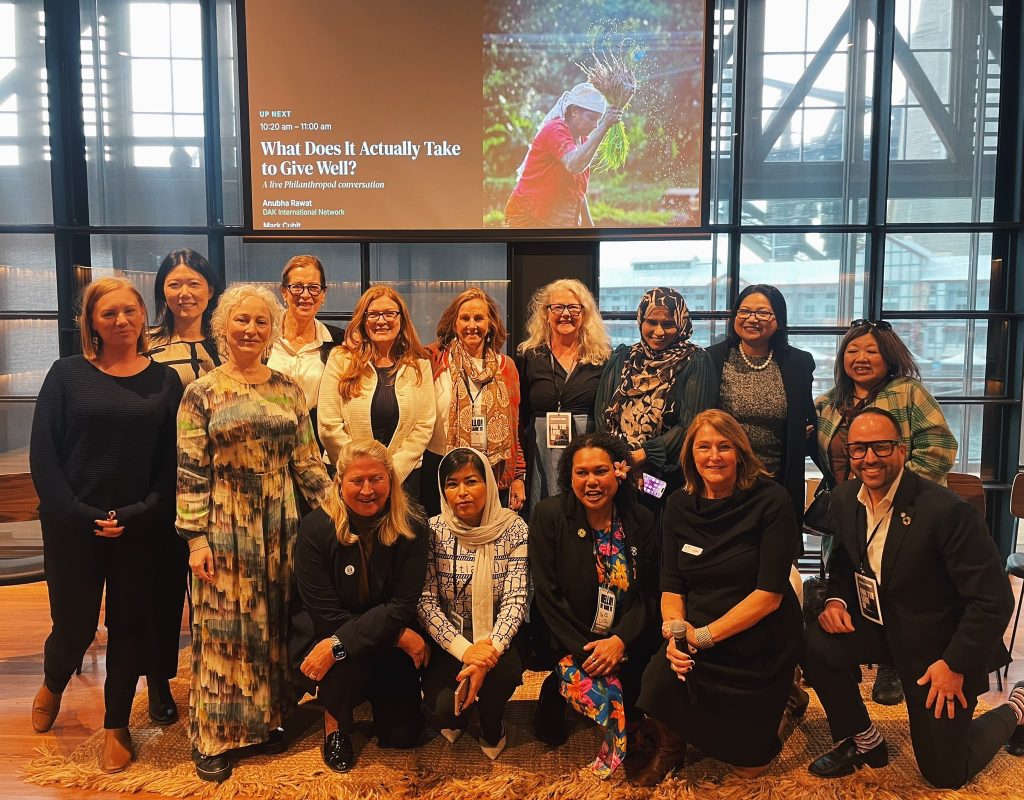
🌍 Session 2: What Does It Actually Take To Give Well? A Live Philanthropod Conversation.
Host Anubha Rawat, Projects Director at DAK International Network sat down with seasoned international philanthropist Mark Cubit for an unscripted conversation about what it really takes to give well across borders.
Drawing on the lessons they’ve learned and the various experiences between them, they explored what works, what doesn’t, and what the sector rarely says out loud.
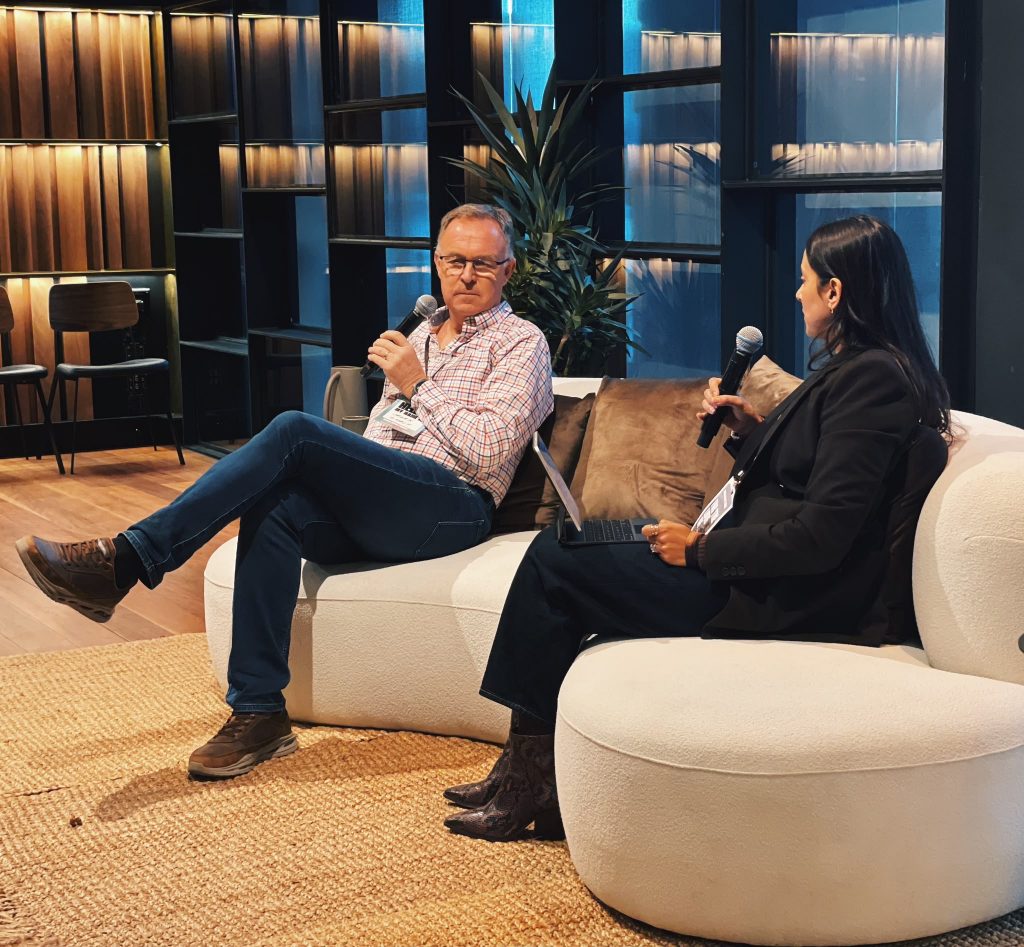
🌍 Session 3: The Lightning Talks: Fresh Thinking, Real Action. 4 speakers. 4 perspectives. 7 minutes each. To inform, provoke, and move you to action.
From cervical cancer elimination to the confidence gap holding back Australian donors, worker-led solutions to sweatshop exploitation, and the case for road safety as one of the highest-return, most overlooked opportunities in global development, these talks are designed to shift how you think and what you do next.
👉 Kirsten Ridley, Senior Program Manager, EPICC, University of Sydney
👉 Louise Pfeiffer, Regional Director Asia-Pacific, The Life You Can Save
👉 Dr Lauren Solomon-Walters, Labour and Human Rights Expert, Independent Expert
👉 Rob McInerney AO, Chief of Future Impact, iRAP
🌍 Session 4: Conflict prevention: Why peace is the best investment.
Armed conflicts are at their highest level in decades, yet global development assistance fell by more than 23% in 2025.
The IMF has found that every dollar invested in conflict prevention saves between $26 and $103 in conflict-related costs, yet prevention remains chronically underfunded.
This session brought together the founder of the world’s leading measure of peace and a practitioner with deep experience working in fragile and conflict-affected contexts in a Fishbowl conversation, drawing the audience into an honest discussion about why prevention remains the exception rather than the norm, and what it would take to change that.
Welcomed to the ‘bowl’ were:
👉 Steve Killelea AM, Founder and Executive Chairman, Institute for Economics and Peace
👉 Grant Bayldon, CEO, World Vision Australia
👉 Belinda Morrissey, CEO, English Family Foundation
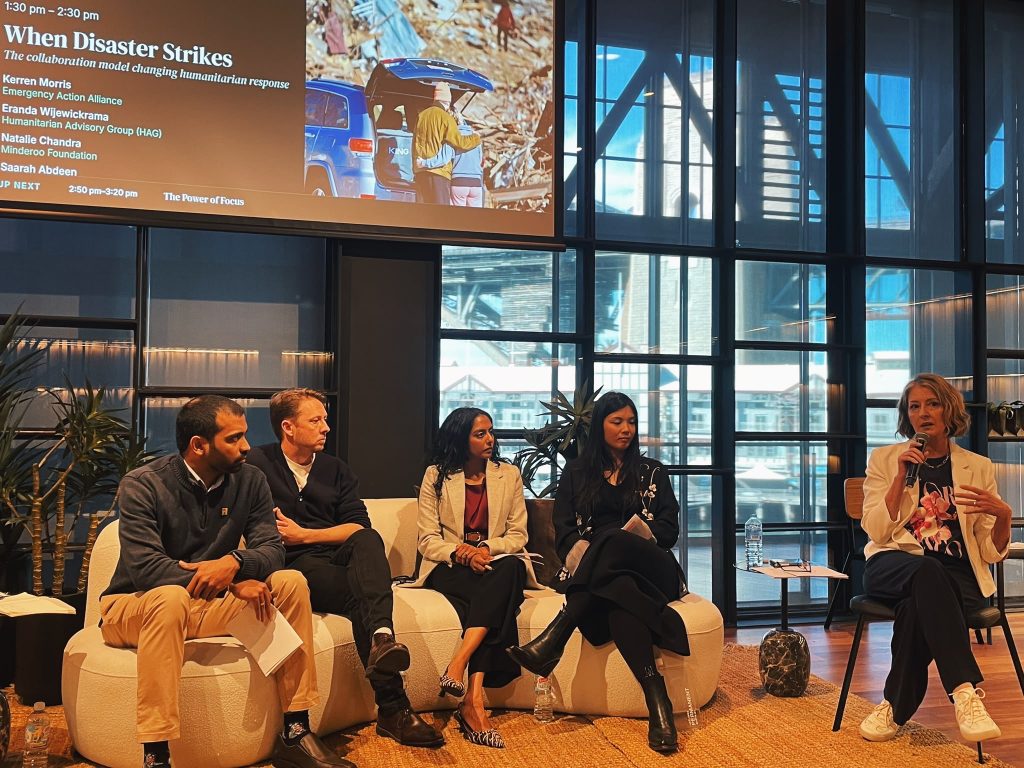
🌍 Session 5: When Disaster Strikes: The Collaboration Model Changing Humanitarian Response
When a major disaster strikes, every moment counts. Swift humanitarian aid means more lives saved, more families supported, and better long term outcomes.
Yet in the crucial hours and days of an emergency we are inundated with multiple charity appeals competing for public attention. For donors, philanthropists, media and corporate partners, it’s confusing, and hard to know where support will have the greatest impact.
This session explored a different approach: the centralised appeal model. Built on shared trust, rapid coordination and a simple idea that organisations working together can achieve far more than any one acting alone.
It’s not just an idea – it is now a reality. We heard the story of Australia’s Emergency Action Alliance and its growing Rapid Response Network, alongside lessons from the UK’s Disaster Emergencies Committee – widely recognised as the world’s leading example of collective humanitarian fundraising.
Through inspiring examples and a lively discussion with sector leaders, discover how coordinated appeals can unlock generosity, direct life-saving funds where they are needed most, and strengthen support for communities facing crisis. For corporates, philanthropy, media and other partners, this is your opportunity to be part of a movement transforming how Australia responds to disaster.
👉 Kerren Morris, Executive Director, Emergency Action Alliance
👉 Natalie Chandra, Advisor, Sector Development and Innovation, Minderoo Foundation
👉 Eranda Wijewickrama, Deputy Director, Humanitarian Advisory Group (HAG)
👉 Saarah Abdeen, Fundraising Manager, ActionAid
👉 Reece Kinnane, Head of Advocacy and Communications, Community Broadcasting Association of Australia
🌍 Session 6: The Power of Focus: Going Deep to Scale Development Outcomes
“Development usually chases scale by funding more projects and programs.”
At this Session, we tested a harder idea: that better development outcomes come from designing and investing in the systems that deliver them – and that this often means going deep in one place over the long term rather than spreading wide.
Drawing on a “go deep” model built in a single country, we examined the trade-offs between breadth and depth, why project-based development so often stalls before it sticks, and whether geographic focus is actually a prerequisite for system-level change across education, health and energy.
A diverse panel of implementers, sector specialists and academic voices brought contrasting views, and put the room’s own instincts to the test with live polling.
👉 Dr Genevieve Nelson, CEO, Kokoda Track Foundation
👉 Petra Arifeae, Head of Primary & Early Years Education, Kokoda Track Foundation
👉 Katrina Barker, Associate Professor, Western Sydney University
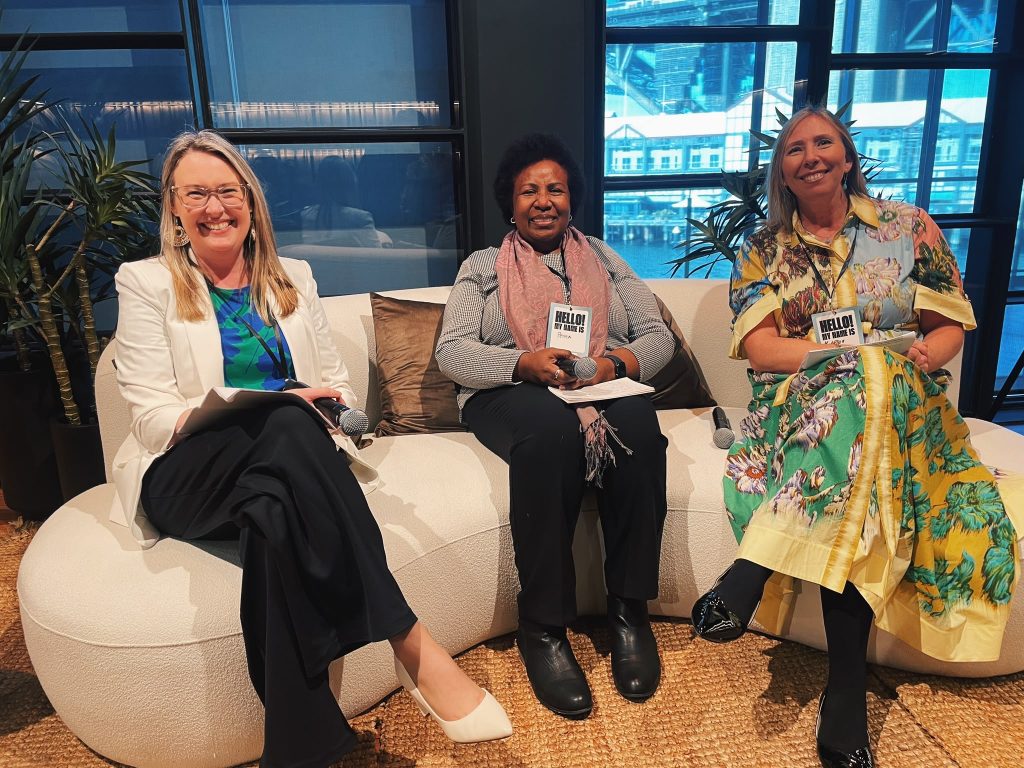
🌍 Session 7: Is our financing stack fit for the purpose of international social entrepreneurs and innovators?
Former social entrepreneurs, active mentors, and angel investors, would suggest not. They would suggest that processes built on risk mitigation, lengthy due diligence, and excessive reporting, divert much of the sector’s resources away from creating impact to serve administrators rather than entrepreneurs and beneficiaries.
In Session 7 we heard about a couple of alternatives (Revenue Based Finance; and Impact Loans) but more importantly open the discussion of of how to make the funding – philanthropic or investment – fit the needs of the social innovators, rather than forcing entrepreneurs to mould themselves to the funding.
👉 Mitra Ardron, Executive Director, Natural Innovation
👉 Tom Dawkins, Co-Founder & Chief Impact Officer, LendForGood
👉 Nina Yousefpour, Director, GoodWolf Partners
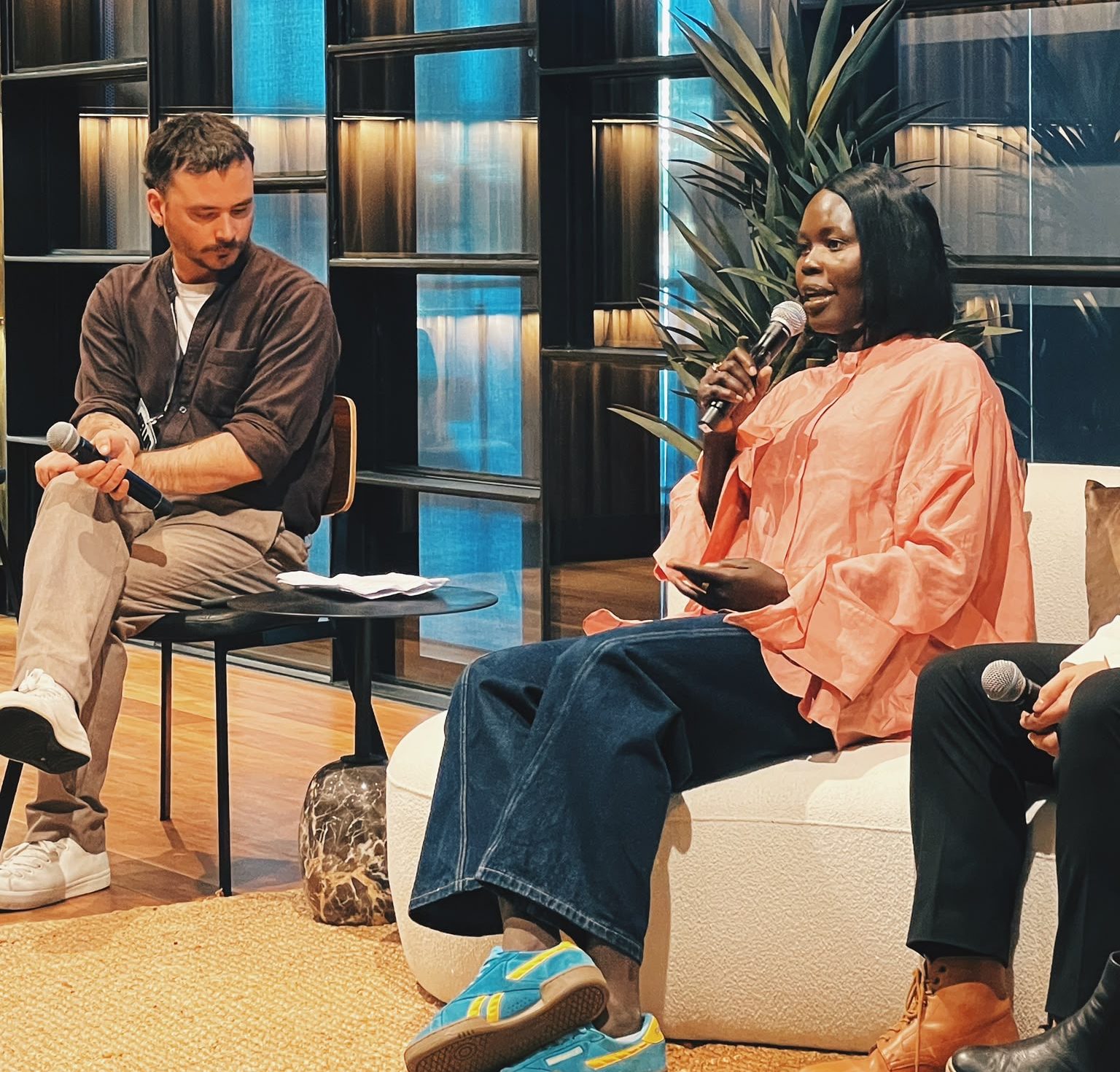
🌍 Session 8: Invest in Her: Why Adolescent Girls Are the Smartest Investment in Foreign Aid
This Session mattered because it asked people to confront a simple gap between evidence and action: if investing in adolescent girls delivers some of the highest returns in development, why are girls still so underfunded?
Hosted by Hayley Cull, Deputy CEO at Plan International Australia, Sam Dover, Journalist at ABC News, and Akec Makur Chuot, Gender Equality Advocate and Plan International Ambassador and former AFLW Player, the audience left with a sharper understanding of how their own decisions can help move money, power and trust closer to the girls, communities and local partners already leading solutions.