In Timor-Leste, one of Australia’s closest neighbours, only one in five preschool aged children is enrolled in school. By Grade 1, around 70% of students are not meeting basic learning outcomes. For thousands of children, the foundations for lifelong learning are missing before formal school even begins.
Over the past year, Mary MacKillop Today’s EdTech for Early Learning (ETEL) Project has been implemented at almost one-third of the nation’s government preschools. Over the coming year, ETEL is now on track to reach two-thirds of the nation’s government preschools.
Yet technology is only one part of this story. Equally important is how a shared vision to transform and scale early learning in Timor-Leste has been realised through an Australian philanthropic partnership: one focused on locally led implementation and intentionally nurtured over more than a decade.
A relationship more than a decade in the making.
Mary MacKillop Today’s relationship with the Noel & Carmel O’Brien Family Foundation began in 2010, built through common values, and a shared interest in education and Timor-Leste. In 2022, the Foundation came to Mary Mackillop Today with a bold proposition: could technology help close the early education gap in Timor-Leste?
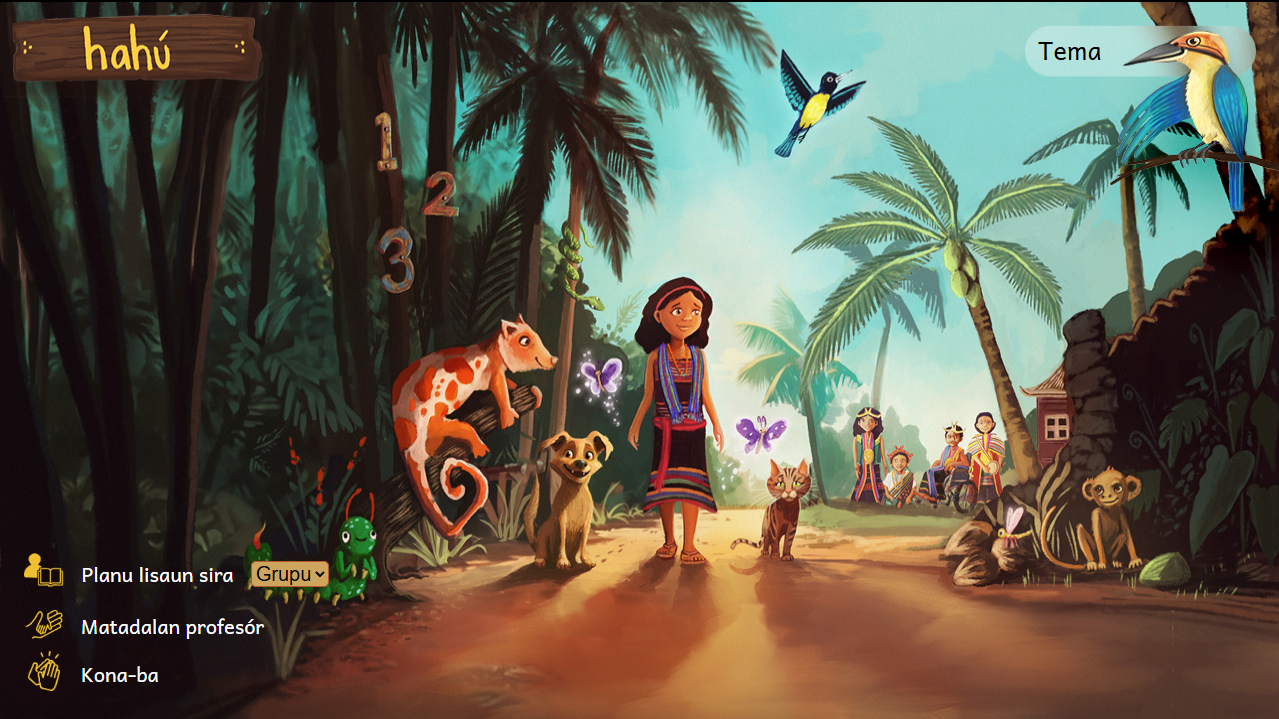
The answer became a co-designed solution. Global EdTech experts World Mosaic were engaged to work alongside our Timor-Leste team in a thorough human-centred design process. The Ministry of Education in Timor-Leste, along with local communities of teachers, parents and students, played a crucial role in developing two complementary digital tools: a classroom app to help preschool teachers deliver curriculum aligned, play-based lessons, and a companion app for parents to reinforce learning at home.
Both are built entirely in Tetun, reflect Timorese culture, stories and curriculum, and run offline to serve communities with limited connectivity. There is scope for other local languages to be added too, with over 20 languages spoken across Timor-Leste. The apps were also designed to avoid individual child screen time altogether, instead enabling shared, interactive learning between children, teachers and parents.
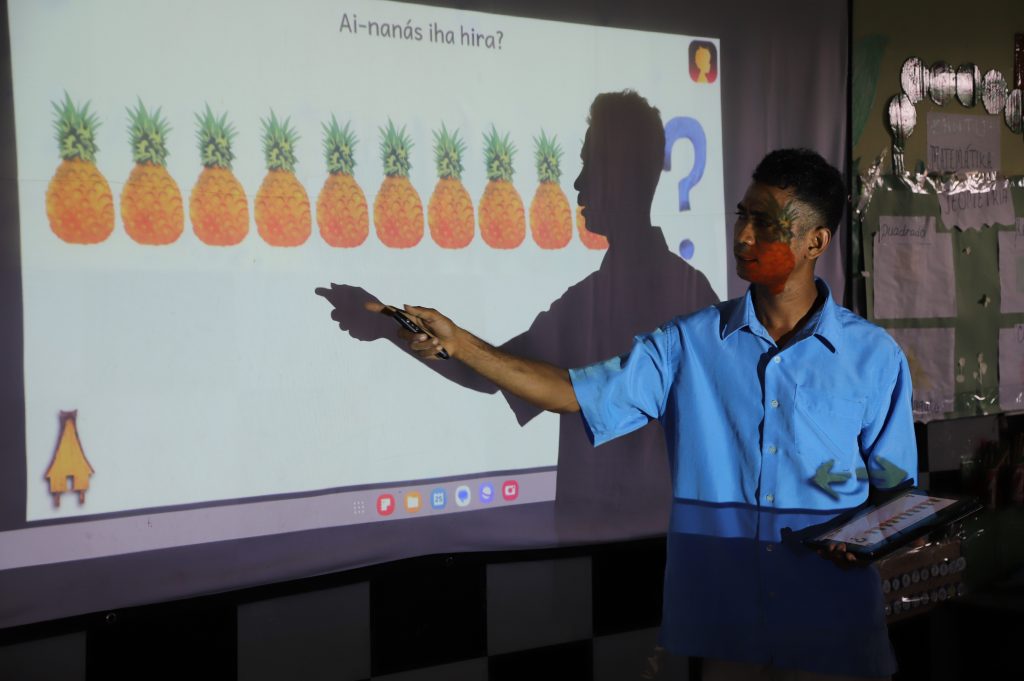
ETEL Teacher. Photo Credit: Mary MacKillop Today
This solution was not possible only through the gift, but the relationship.
It is tempting, when telling this story, to focus on the size of the grant that enabled this to take place. But the size of the gift is not what made the project work. What made it possible, was the open, honest and authentic relationship built between donor and implementer.
For Mary MacKillop Today, this partnership has become a case study in what Australian funded, yet locally-led, development overseas can look like in practice. From the outset, we were transparent with the O’Brien Foundation Australia about how funds would be used, managed and measured, and clear that the project would be designed and delivered by our Timorese team in the lead. Of course, technical support was critical through World Mosaic, but they took their lead from local experts, engaging in human centered design with the end user in mind. Rather than push back on this approach, the Foundation embraced our track record and took a genuine back seat on project design decisions.
Importantly, that trust ran in both directions. The size and scope of the gift encouraged us to think beyond our normal scale of operations, and to seriously consider what it could mean to become a national implementing agency with reach across all 8 of Timor Leste’s municipalities.
ETEL Student. Photo Credit: Mary McKillop Today
The relationship was also tested in ways that rarely make it into impact reports. At points, coming from a commercial position, the Foundation sought faster scale and a lighter touch implementation, while our instinct, grounded in our Timorese team’s experience, was to go slower and deeper, building quality before reach. Holding that position required confidence in our own evidence and approach, and patience while the Foundation tested it against their own. Added friction came when inevitable implementation delays slowed the pilot at points. Rather than treating these as failures to be managed around, both sides treated them as opportunities, either to innovate or to deliberately slow down and make sure the path to scale was right, not just fast. That discipline matters more than it sounds. It is easy to talk about trust when everything is on schedule. The real test is whether that trust holds when it is not.
From pilot to transformational scale.
The pilot reached six preschools, 500 children and 300 homes by July 2025. It demonstrated strong results, including increased student participation and deeper parent engagement, alongside an unintended but welcome outcome: increased student attendance. The overarching objective was always to develop and implement a comprehensive early learning system, carefully tailored for Timor Leste, to provide a low cost, scalable opportunity for the Ministry of Education to radically improve early learning approaches in preschools across Timor Leste. The classroom app has been designed to improve the ability of the teachers to teach the Ministry of Education’s early learning syllabus.
On the strength of that evidence, Mary MacKillop Today has since scaled the project to 100 schools and around 9,000 children currently, along with their teachers and parents over the past year. Now, we are preparing Ministry of Education staff for the transfer of the early learning software to their servers, as ongoing service and support capability has been established in-country with Ministry of Education cooperation. The app framework will also be released under open licence, making it freely available for other countries to adapt and build their own culturally grounded learning tools, at far lower cost and in far less time.
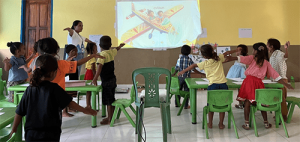
ETEL Classroom. Photo credit: Mary MacKillop Today
A model for locally led, ethical partnership.
Philanthropists often talk about building trust with their partners. But a model of genuine trust, not just a transfer of funds, is what allows innovation and deep collaboration to actually occur. That requires philanthropists to be willing to place the local community, and the end user in this case, at the centre of decision making, and to give those closest to that community the freedom and flexibility to use their expertise for the good of the project. It is, in practice, a willingness to be uncomfortable: to fund the work without controlling it.
But that does not mean philanthropists must watch from a distance. Foundation Director Brendan O’Brien is engaged in research conversations about scaling, facilitating introductions to potential funders within his networks, and personally invested in the project’s next chapter. In September, he will again visit Timor-Leste and our Country Director Alipio with the AIDN Insight Tour. This is the kind of direct and sustainable engagement that only happens when a partnership has been built with care, over many years.
Lessons for the sector.
Our experience offers a few takeaways for organisations building major donor relationships:
- Subject matter expertise builds donor confidence. Decades of experience, combined with partnering with world class delivery experts such as World Mosaic, provided the technical credibility that was instrumental in reassuring O’Brien Foundation Australia that the solution was sound.
- Major donors think differently. Trusts and foundations often approach giving with a business mindset, weighing sustainability and scalability alongside personal values. Communications and reporting need to speak to both.
- Trust compounds over time. Earlier, smaller projects with O’Brien Foundation Australia effectively served as pilots, not for the technology, but for donor stewardship and impact reporting. Those smaller donations laid the groundwork for a transformational gift years later.
- Trust is tested, not just built. It is one thing to establish trust at the outset of a partnership. It is another to maintain it through delays, course corrections and the inevitable gap between plan and reality. The willingness to be honest about what is not working is what determines whether trust survives contact with implementation.
 Caitlin McGrath is Program Director at Mary MacKillop Today, an Australian community and international development organisation working in Timor-Leste, Fiji, Peru and Australia.
Mary MacKillop Today is an international development organisation working in Australia and overseas. We build partnerships that create opportunities for self determination through education and the teaching of practical life skills to women, men and children.
Feature image: ETEL App. Photo Credit: Mary MacKillop Today