How long have you been involved in the international development sector, and what first inspired you to enter the sector?
I’ve been working in the sector for just under a decade, though the seeds of this were planted long before that. In 2018, I shut down my tech startup and went back home to India to figure out my life. I ended up helping a friend, my now co-founder Gayle of Sewing The Seeds, with a textiles education project in a small town called Pondicherry, which was supporting women from low socio-economic communities. It was there I met Gayatri, who was 20 at the time. She came from a village where families receive money when their daughters get married. However, Gayatri wanted to be a fashion designer, but her parents couldn’t afford to support her education.
Gayatri’s story landed differently for me because it echoed my own grandmothers’ stories — my dadi and nani, who were married at 14 and 17 and never got to finish school. My dadi taught herself to sew so she could make clothes for her three sons. My nani learned to sew because she genuinely loved fashion and I know that if she’d had the chance, she would have become a designer herself. My grandmothers were refugees, and in the midst of rebuilding their lives financially post-partition, they relied on their sewing skills to save money while providing for their children.
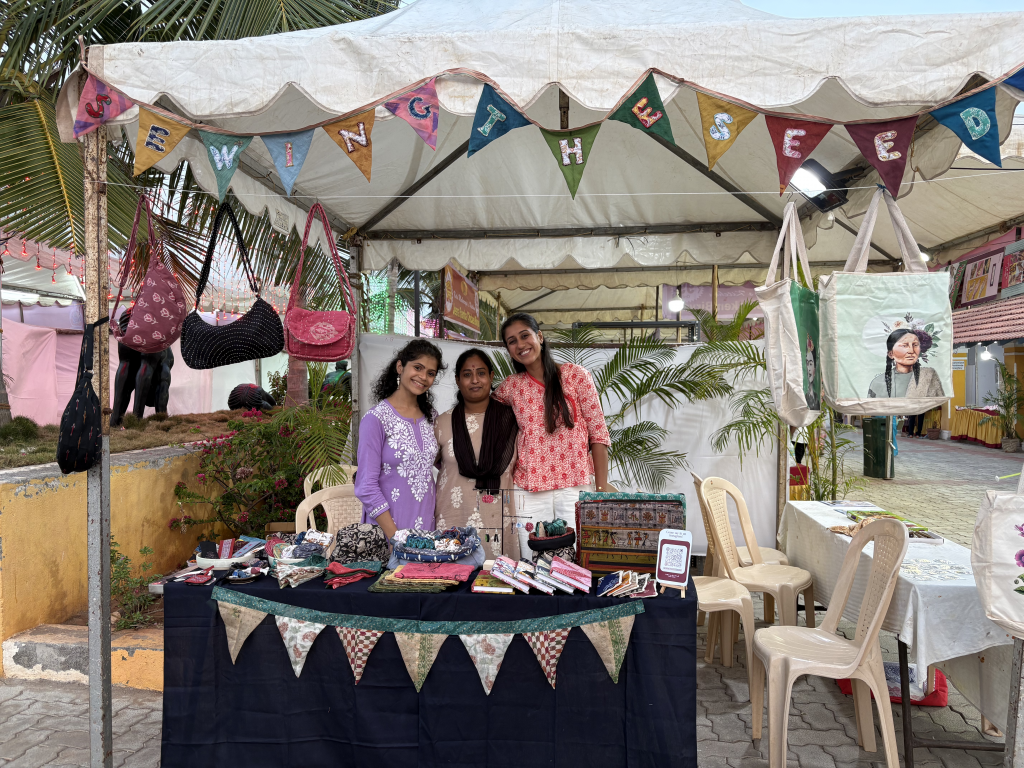
Source: SewingTheSeeds
 As their granddaughter, who now gets to write this piece and have access to these incredible opportunities in life, I know I’m only here because of the hard work and sacrifices of the women before me. I recognise my “birth lottery,” and the sheer luck involved in the socio-economic circumstances we’re born into, and how much that dictates our access to education, employment, financial independence, agency and choice. While I had no real intention of entering the international development sector, it was the combination of my grandmothers, the women and gender equity advocates in my family, and the women I’ve crossed paths with at Sewing the Seeds who inspired me into this sector. I’ve seen firsthand the power of educating women in India, specifically in textile education, and the role that creating employment for women from low socio-economic backgrounds can play in breaking the poverty cycle. Witnessing that through different threads of my life continues to inspire me to stay in the sector.
What have been the biggest changes you have witnessed throughout your time in the development sector, specifically in relation to your area of expertise?
I’ve witnessed three big shifts through my time in the sector.
1. More cultural awareness from funders and founders on our biases.
I hear funders and founders (myself included) increasingly recognising their own biases when they’re serving a land, community or country they aren’t culturally from, and actively working to build the right practices so cultural nuance is carefully considered. That’s been wonderful to witness. I also want to acknowledge that while there’s been a beautiful shift in unlearning our unintentional “white saviourism,” there’s still a LONG way to go in reconciling the effects of colonisation and learning how to meaningfully support change with community, for community.
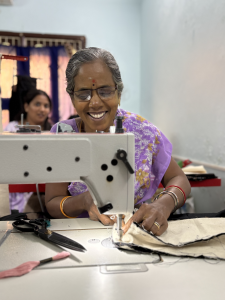
Source: Sewing the Seeds
2. Understanding the value of local-led impact and co-design.
Over the years, it’s been relieving to spend less time justifying why we involve the women, our beneficiaries and local leaders, in every part of our work. For example, in our employment arm, we ask the women things like ‘how long do you think it will take to make 100 tote bags for this customer as a team?’, and only once the women discuss it and come back to us, we set the pricing for a customer. A few years ago, that kind of co-design pricing model would have needed defending. Now it’s increasingly understood as the sector evolves to appreciate local-led work with community, not just for community.
3. Trust-based philanthropy.
In the past, we worked under outcomes-based funding that sometimes limited our ability to make meaningful impact, because we’re guided by the needs of our beneficiaries and local leaders, and we iterate as those needs shift. Outcomes-based funding can feel constraining when an expected result no longer matches what the community actually needs. It’s been a relief to see the gradual shift toward trust-based philanthropy, where funders trust our WHY and HOW rather than staying fixated only on the WHAT.
This trust is what’s let things like our women’s circles over chai, setting up individual bank accounts, providing microloans, english classes and women’s health workshops grow, none of which were in our original pitch, but all of which have become central to what actually changes a woman’s life and supports them to break the poverty cycle.
If you could see one change in the international development sector occur tomorrow, what would it be and why?
If I could only see one change, I would want the sector to have more funding for the unglamorous, unscalable-sounding parts of a model, just as readily as it has funding for the impactful-sounding parts. In our case, that’s the operational and human resource costs it takes to make our educational programs, employment, and ancillary support happen. We try to remain sustainable through our employment model, but because our work is with women who didn’t get to go to school, who are from low socio-economic backgrounds with diverse and complex needs, it’s more resource-heavy. Sometimes finding funding for this kind of systems-thinking work, where “visible outcomes” take time, feels like an uphill battle.
That resourcing gap shows up in the sector more broadly too. It shouldn’t be the norm for people in impact and international development to be underpaid and overworked. It should be the opposite. People doing this work should be advocated for, supported and properly resourced through philanthropy and funding, not expected to run on goodwill.
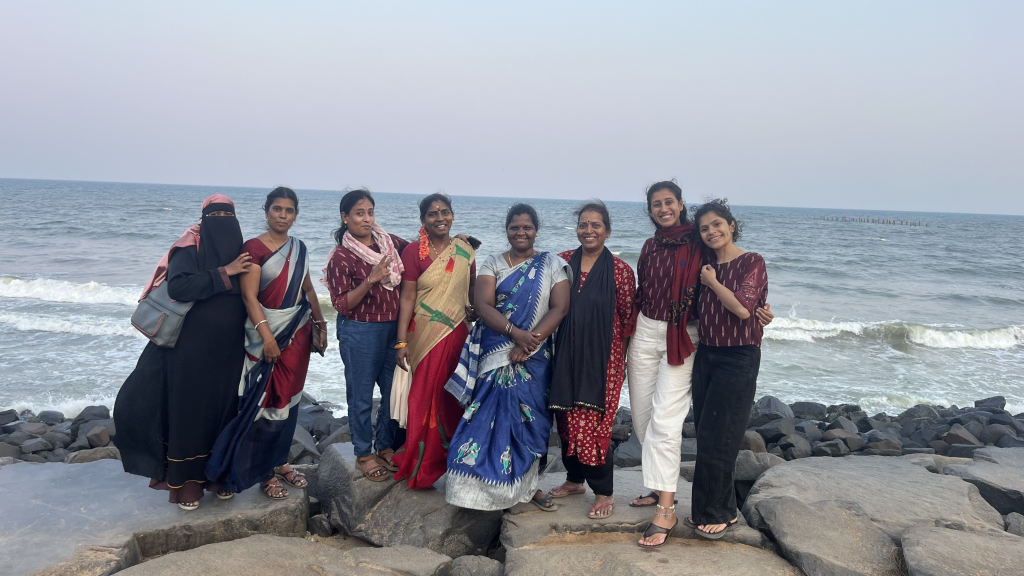
Source: Sewing the Seeds
AIDN’s ethos is “more” and “better” international giving from Australians. What does “more” or “better” international giving look like to you?
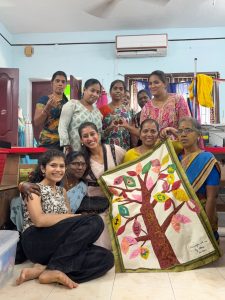
Source: Sewing the Seeds
To me, giving better looks like listening, learning and understanding. In a practical sense, that looks like funders listening to the experiences of the founders, leadership, beneficiaries and local leaders, trusting that experience and not assuming what is best. And where there is capacity, better giving looks like funding the whole model, not just the visible products or programs. It’s easy to fund a sewing machine or an education program, because it has a clear, satisfying line to a tangible object or experience. It’s harder yet more impactful to fund the trust-building, the co-design conversations, the evaluation, the health support, the education, the employment pathways and most importantly the humans behind making everything happen.
Giving more matters too. We’ve had community leaders from other regions across India come to us asking for us to scale our model into their village. The need is real, and while we have been able to scale in Pondicherry and Khatu Shyam, the honest reality is we need more funding to support the scale of the need we know exists.
But more without better may replicate fragility faster, which is why we need more and better equally.
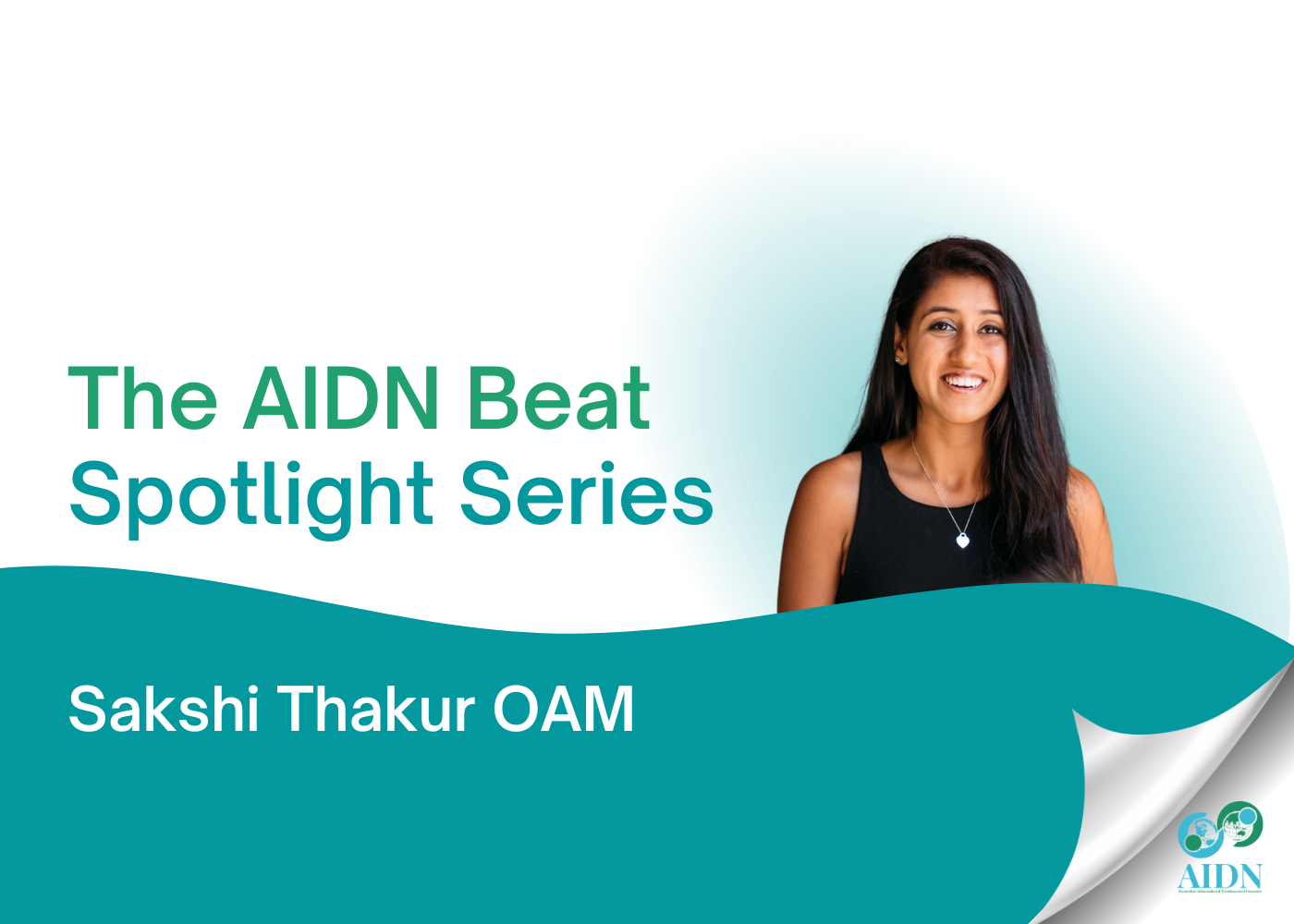
 Sakshi Thakur OAM co-founded Sewing The Seeds, a social enterprise that provides textile education and employment with women from low socio economic backgrounds in Pondicherry, South India. Through textiles education and equitable employment, the organisation prioritises impact in four key areas — education, employment, empowerment, and environmental sustainability. They create this employment by hand making wholesale products such as merchandise for conferences to retail fashion dresses. Where they can, they also showcase sustainable Indian textile techniques and upcycle donated sarees through their making – they have upcycled more than 1900 sarees to date.
Sakshi has an academic background in Biomedical Sciences, Finance, and a Master of Entrepreneurship from Melbourne Business School, and her innovative approach to social impact has garnered significant recognition as she was awarded the Medal of the Order of Australia for her service to the community through social welfare organisations in 2024.
SewingTheSeeds was also one of the three NFPs doing transformational work on women and girls across the Asia-Pacific featured at The Funding Network and AIDN’s annual fundraising event in October 2025.