Across much of the world, a quiet but significant shift is underway in the education sector. This is particularly true for organisations working on education in an international development context.
For many years, the focus was clear: getting children into school, increasing enrolment, and expanding access. This phase of reform was both necessary and impactful, and in countries like Cambodia it has delivered real progress.
But a more difficult question is now coming into focus: are children in school actually learning?
In Cambodia, this question is particularly pertinent. The most recent results from the Programme for International Student Assessment (PISA) in 2022 placed Cambodia among the lowest performing systems. It reflects both a legacy of rapid expansion in access to education and a broader global pattern where gains in schooling have outpaced improvements in learning outcomes, particularly in systems where strengthening the foundations of teaching and learning remains a priority.
Multilateral institutions such as the World Bank and UNESCO have increasingly highlighted this gap between schooling and learning (UNESCO, 2026). UNESCO’s 2026 Global Education Monitoring Report observes that access does not equate to equity or quality, and that gains in participation must be analysed alongside what students are actually learning. The report also highlights that quality education depends not only on access, but on motivated teachers, effective school leadership, safe learning environments and systems that support continuous improvement.
Expanding access has been an essential foundation, but it is only the beginning of what is needed.
Beyond access: the shift to quality
In Cambodia, as in many countries, early education reform efforts focused on access. Schools were built, teachers were recruited, and enrolment increased. These were and will continue to be critical steps, but they have not translated into consistent learning outcomes on their own.
SeeBeyondBorders’ data from early grade classrooms in Krahlanh and Srei Snam Districts in Siem Reap Province illustrate the scale of the challenge. Baseline results from independent testing in 2023 showed that only around 1 percent of Grade 3 students were reaching minimum proficiency in literacy, and just 4 percent in numeracy.
At the same time, there were also signs of progress. Where teachers and school leaders receive sustained support, outcomes improved. Across schools supported by SeeBeyondBorders, there has been more than a 39 point increase in the proportion of students reaching minimum proficiency over a three year cycle. This is where the shift becomes clearer, as improvements in learning begin to reflect the quality of what is happening in the classroom, particularly the quality of teaching and school leadership.
Teaching as a profession, not simply a function
As these results underscore, if effective learning is the outcome we care about, attention needs to turn to the classroom and role of the teacher.
In Cambodia, as in many systems, teachers often have limited access to ongoing professional development. Support can be piecemeal, making it difficult to shift practice in lasting ways. Latest Cambodian research and international evidence suggests that improving learning outcomes is less about introducing new materials and more about strengthening how teaching methodologies evolve over time through professional development, mentoring, coaching, reflection and instructional leadership. Research from the Professional Identity for Khmer Teachers (PIKT) project highlights the importance of teacher agency and professional identity. The World Bank and Global Education Evidence Advisory Panel similarly identify ongoing teacher support and structured professional development as among the most powerful and cost-effective ways to improve learning outcomes (World Bank, 2023).
However, this is not about teachers and school leaders adopting externally driven solutions, but rather about them developing contextually appropriate agency over their own professional growth so that improvements are owned locally and continue long after external support ends. This commitment to locally led development is shared by organisations such as VVOB and Kampuchean Action for Primary Education (KAPE) in Cambodia, both of which work closely with ministries of education and local education stakeholders to strengthen national and local education systems.
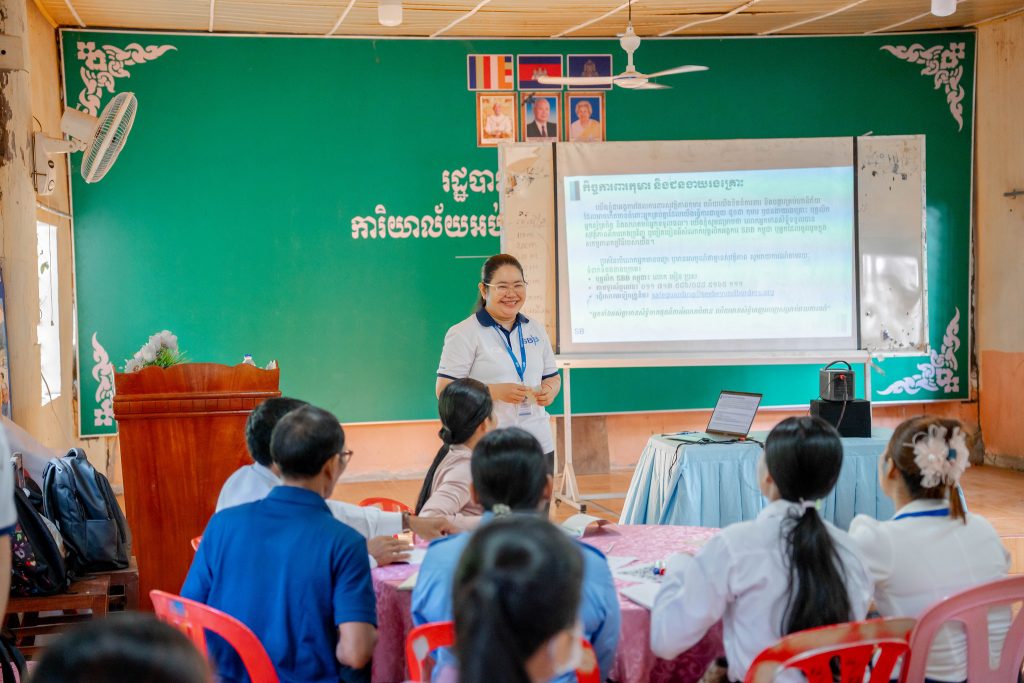
A Community of Practice session brings teachers in Banan together to develop their leadership skills and share knowledge. Photo Credit: SeeBeyondBorders
Leadership as the multiplier
School leadership also plays a defining role in whether the positive changes in learning outcomes take hold and are sustainable, beyond simply access to education numbers. Where principals prioritise teaching and learning, support their teachers, and foster collaboration, improvements tend to be more consistent and sustained. Where leadership remains largely focused on traditional administrative functions, progress is often slower.
Pov Pheung, Managing Director of SeeBeyondBorders Cambodia, describes this shift simply: ‘When school leaders see themselves as leaders of learning, everything changes. Teachers feel supported, students are more engaged, and the whole school begins to move in the same direction.’ Leadership of this kind is often understated in current Cambodian educational reform, but it is central to how change is experienced within schools.
From pilots to systems
And yet, even if these educational improvements are made, the next step is considering how they can actually be sustained and extended. Many effective interventions lose traction not because they fail, but because they are not fully embedded within existing systems and are not owned by the teachers and school leaders themselves.
In Cambodia, district-level approaches that improve both teacher effectiveness and student learning are gaining traction as a more viable pathway. This involves working across clusters of schools, engaging local authorities, and strengthening teacher and leadership networks. It also requires attention to inclusion, ensuring that girls, students with disabilities, and those from marginalised communities are able to participate and benefit.
Communities of Practice (CoPs) can play a vital role in responding to this issue. Throughout Cambodia, CoPs are beginning to demonstrate how change can be embedded by building shared ownership and strengthening professional development culture within the system. CoPs at SeeBeyondBorders’ Teacher Development Centres involve teachers, school leaders, local education authorities and SeeBeyondBorders staff in mentoring and leadership development.
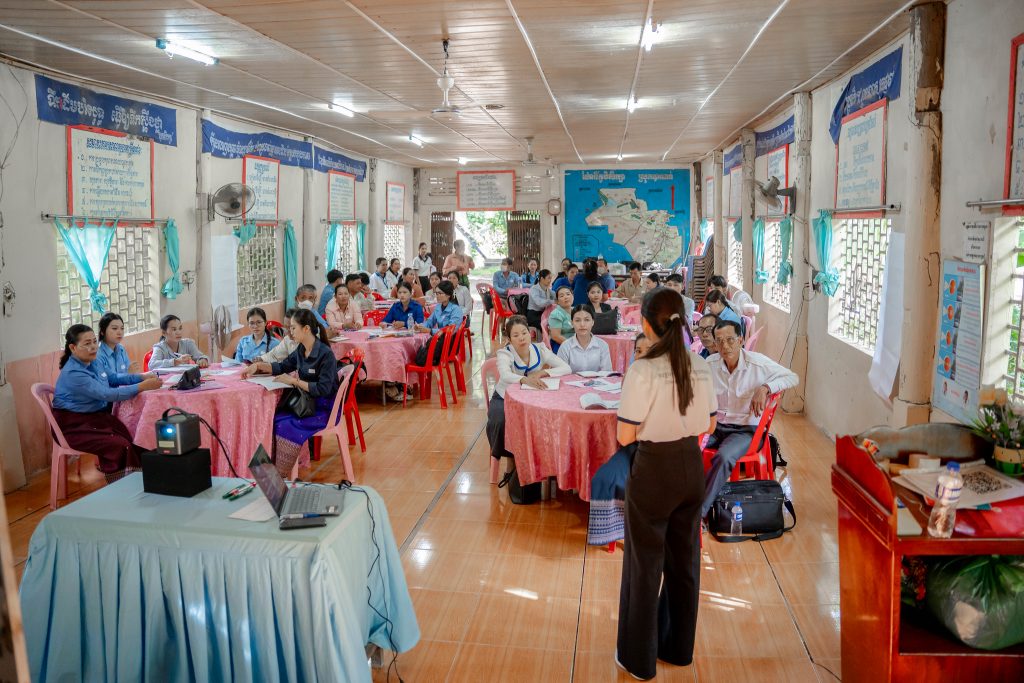
Educators in Banan district convene at the Teacher Development Centre, strengthening their practice through peer collaboration and shared learning. Photo Credit: SeeBeyondBorders
An opportunity for deeper collaboration
For Australia’s development community, this shift raises important questions about how we engage and invest in education overseas. It is not only about what we fund, but how we contribute, how approaches work within systems, and how we learn alongside those we seek to support. For the team at SeeBeyondBorders, we can see that Australian funders are beginning to embrace this journey, such as the Chippin Away Foundation which began supporting this work in July 2025 following an AIDN Insight Tour.
There are also emerging spaces for this kind of exchange. The upcoming EPIC Cambodia Summit (22-24 July) will bring together leaders across policy, research, and practice to explore education reform in Cambodia and the region. International collaboration is also fostered through forums such as the International Education Funders Group, which met in London in April this year, bringing together leaders from philanthropy, government, research and civil society to strengthen collective action for education.
These are not new ideas, but there is now a growing body of evidence behind them, along with a greater willingness to engage with their complexity. Cambodia offers a useful lens through which to understand where education reform is heading, and what it demands.
 Sally Miles is CEO of SeeBeyondBorders Australia with more than 20 years’ experience across education, sustainability and the not-for-profit sector. Sally holds a Master of Social Change and Development and has led strategy, partnerships and fundraising for organisations delivering social impact in Australia and internationally. She is a long-standing member of the Sydney Chapter of UN Women Australia, has been actively involved in Australian Council for International Development (ACFID) Communities of Practice, and recently became a member of the ACFID Code of Conduct Committee.
SeeBeyondBorders Australia is an Australian NGO that forms part of an international alliance across Australia, Cambodia, the United Kingdom and Ireland. In partnership with its locally led Cambodian organisation, SeeBeyondBorders works alongside educators and communities to strengthen teaching quality and improve learning outcomes for children in disadvantaged primary schools through its evidence-based Transform Education Program.
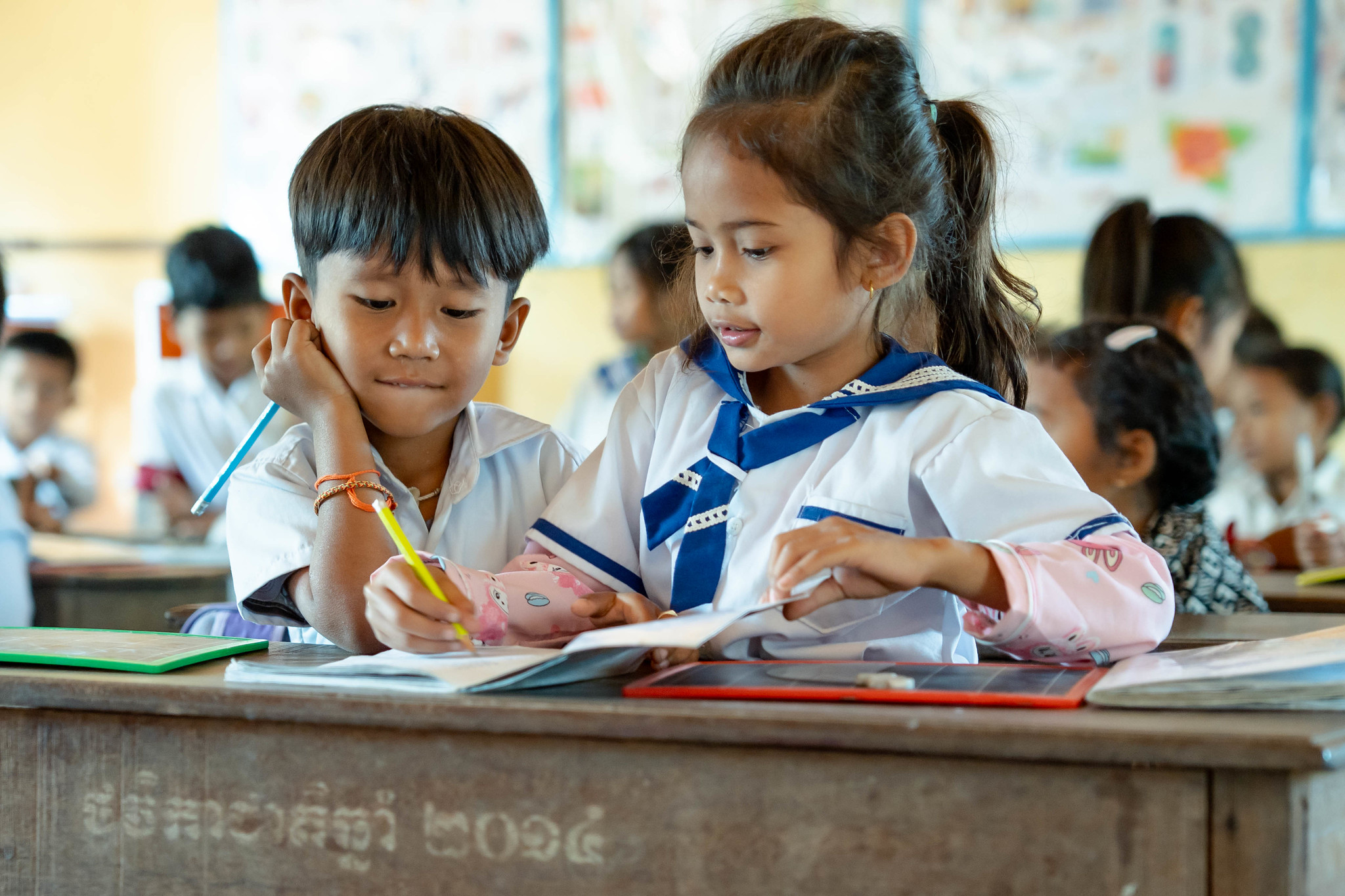
Feature image: Students collaborate and support one another’s learning through group work activities (Kralanh district). Photo Credit: SeeBeyondBorders.